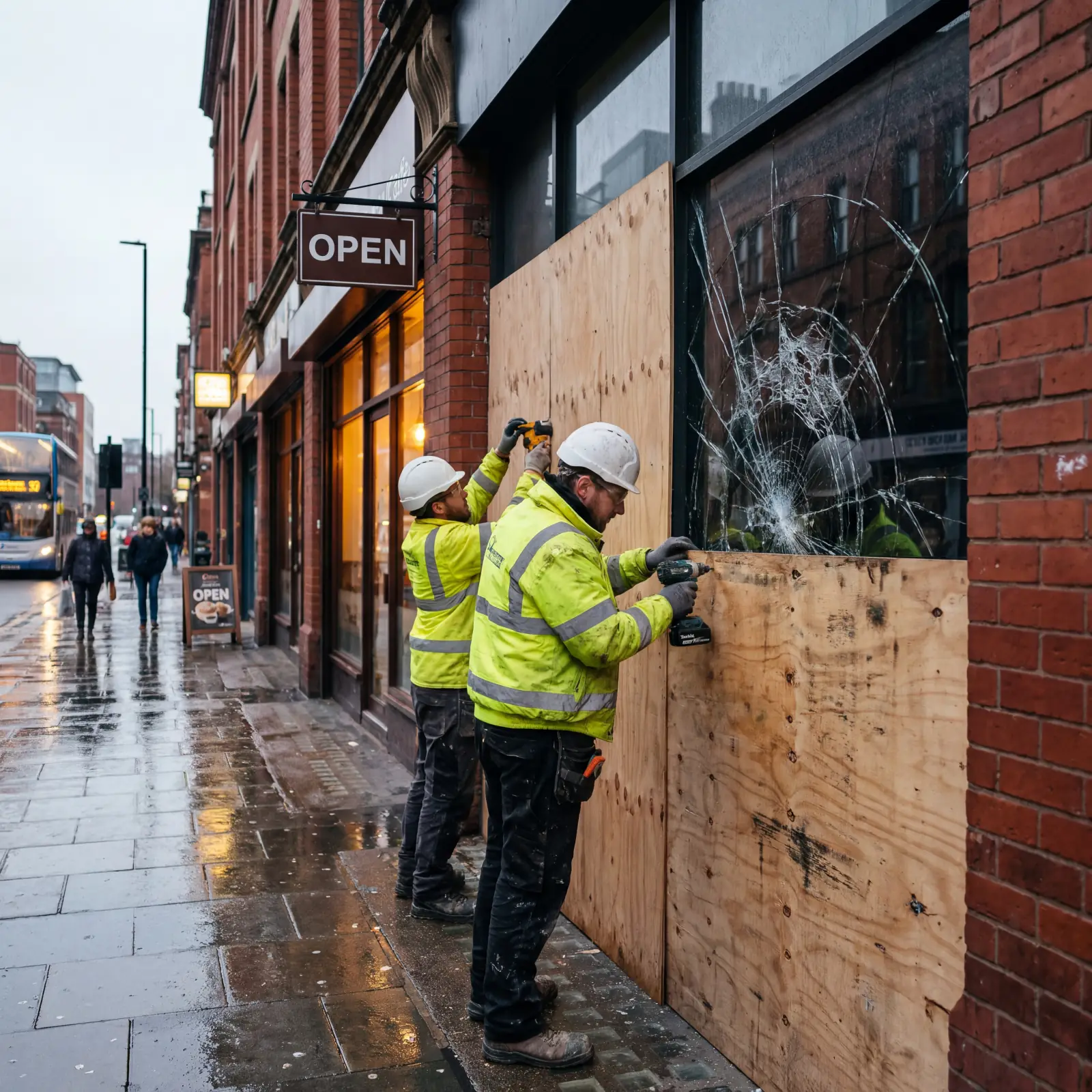
The call usually comes from a keyholder or the alarm company at some ugly hour. The front glass is gone. Break-in, vandalism, or a delivery van misjudging the kerb, it hardly matters, because a smashed shopfront is a different animal from a broken house window. There's stock on display, staff due in hours, insurance conditions to satisfy, and every hour of boarded-up frontage quietly bleeds sales.
We've been reglazing Manchester shopfronts for years, and the businesses that recover fastest all follow roughly the same sequence. This is it, start to finish, with the least lost time and money.
The first hour: secure and document
- Nobody through the front until loose glass overhead is cleared, shopfront panes are big, heavy and fail unpredictably
- If it's a crime, call the police and get the crime reference number before anything is moved; insurers require it
- Photograph and video everything, the damage, the pavement, the stock, any point of entry, wide shots and close-ups
- Call a 24/7 commercial glazier with your photos; a competent one quotes make-safe and reglazing from them and gives an arrival time
- Move display stock out of sight and reach, because an open frontage advertises to a second visitor
Our 24/7 emergency line covers all of Greater Manchester from Trafford Park, typically reaching site in 30-60 minutes, with the price agreed before anyone is dispatched.
Make-safe that lets you keep trading
Standard practice is boarding, which is fast, secure and cheap. The trouble is that a fully boarded frontage reads as 'closed' even when you're open. So tell the glazier you intend to trade. Partial boarding around a safe entrance, clear polycarbonate glazing instead of plywood, and 'business as usual' signage all keep footfall alive. A good boarding-up team engineers the make-safe around your opening hours, not just around the hole.
Why shopfront glass takes days, not hours
Domestic glass can often be swapped the same day. Shopfront glazing usually can't, and for sound reasons. The panes are large and made to order, the law requires safety glazing in shopfronts, meaning toughened glass (which must be cut before toughening, then furnace-processed) or laminated glass, and insurers frequently insist on laminated for security. Realistic timelines run 2-4 days for standard toughened sizes and up to a week for laminated or oversized panes. Anyone promising same-day permanent glass on a big pane is describing an off-the-shelf size, or overpromising.
Because we manufacture and process glass locally, our shopfront turnarounds sit at the fast end of those ranges, and we schedule the final glazing outside your trading hours so the swap from board to glass costs you nothing extra.
The insurance file that gets paid
Commercial policies almost always cover glass, but claims move at the speed of your paperwork, so build the file as you go. Crime reference. Timestamped photos. The glazier's make-safe invoice, which counts as emergency mitigation that insurers expect you to arrange without pre-approval. The reglazing quote with the glass specification stated, and a note of lost trading hours if your policy covers business interruption. Check the excess before assuming a claim is worthwhile, because on a £600 pane with a £500 excess, claiming can cost more in future premiums than it returns.
Coming back stronger than before
Reglazing is your moment to fix the vulnerability that just cost you. Laminated glass holds together under attack, so the smash-and-grab that emptied the window display simply doesn't work against it. Anti-shatter film upgrades existing glass elsewhere. Look at the frame too, since aluminium shopfront systems with modern locking outperform tired frames that let the glass down. And if ram-raiding or repeat vandalism is the local pattern, bollards and shutters change the economics for the attacker.
Fancy a full-frontage rethink, whether that's a new shopfront, automatic doors or curtain walling? Our commercial team handles design, compliance and installation across the North West, from single shops to multi-unit parades.
Prepare now, in five minutes
The businesses that bounce back fastest all did the same three things before anything broke. They saved a vetted 24/7 glazier's number where keyholders can find it. They photographed their frontage while it was intact, which proves invaluable for matching and claims. And they checked their policy's glass cover and excess. Do those today and the 3am phone call becomes a process instead of a crisis.
It's worth briefing your keyholders and alarm company on the plan too. Who calls the glazier, who photographs, who talks to police, and who decides between trading-friendly boarding and full closure. In multi-staff businesses the damage tends to happen on the one night the owner is unreachable, and a one-paragraph procedure taped inside the office cupboard has saved more trading days than any pane of glass we've ever fitted. Resilience is mostly deciding things before you need to.
Frequently asked questions
How much does shopfront glass replacement cost?
Toughened shopfront panes typically run £400-£900 fitted for standard sizes, with large or laminated panes at £800-£1,500+. Boarding and make-safe adds £150-£300. Insurers usually cover it, so get the glass specification stated on the invoice for the claim.
How quickly can a smashed shopfront be boarded up?
In Greater Manchester, within the hour is realistic from a local firm. We typically reach sites in 30-60 minutes, 24/7. If you intend to open, ask for a trading-friendly make-safe.
Can I stay open with a boarded shopfront?
Usually yes, provided the entrance is safe and the boarding is secure. Partial boarding, polycarbonate panels and clear signage keep footfall alive. Tell the make-safe team you plan to trade and they'll set it up accordingly.
Does business insurance cover broken shopfront glass?
Most commercial combined policies include glass cover, and many cover boarding as emergency mitigation. You'll need a crime reference for criminal damage, photos, and itemised invoices. Check your excess before claiming on small panes.
Should I upgrade to laminated glass after a break-in?
If the attack targeted the glass, strongly consider it. Laminated panes hold together when struck, which defeats smash-and-grab, and some insurers reduce premiums or require it after repeat claims. It costs more than toughened, but far less than a second burglary.
Who is responsible for shopfront glass - landlord or tenant?
The lease decides. Full repairing leases usually put glass on the tenant, while some landlords insure the building including glazing and recharge the premiums. Check the lease and whoever's policy responds, and don't let the responsibility question delay the make-safe.
Smashed frontage right now?
One call does it. Make-safe in under an hour across Greater Manchester, insurance-ready paperwork as standard, and replacement glass manufactured locally with the final glazing scheduled around your trading hours.
Call 07533 830717, WhatsApp us a photo for a fast quote, or request a free quote online.