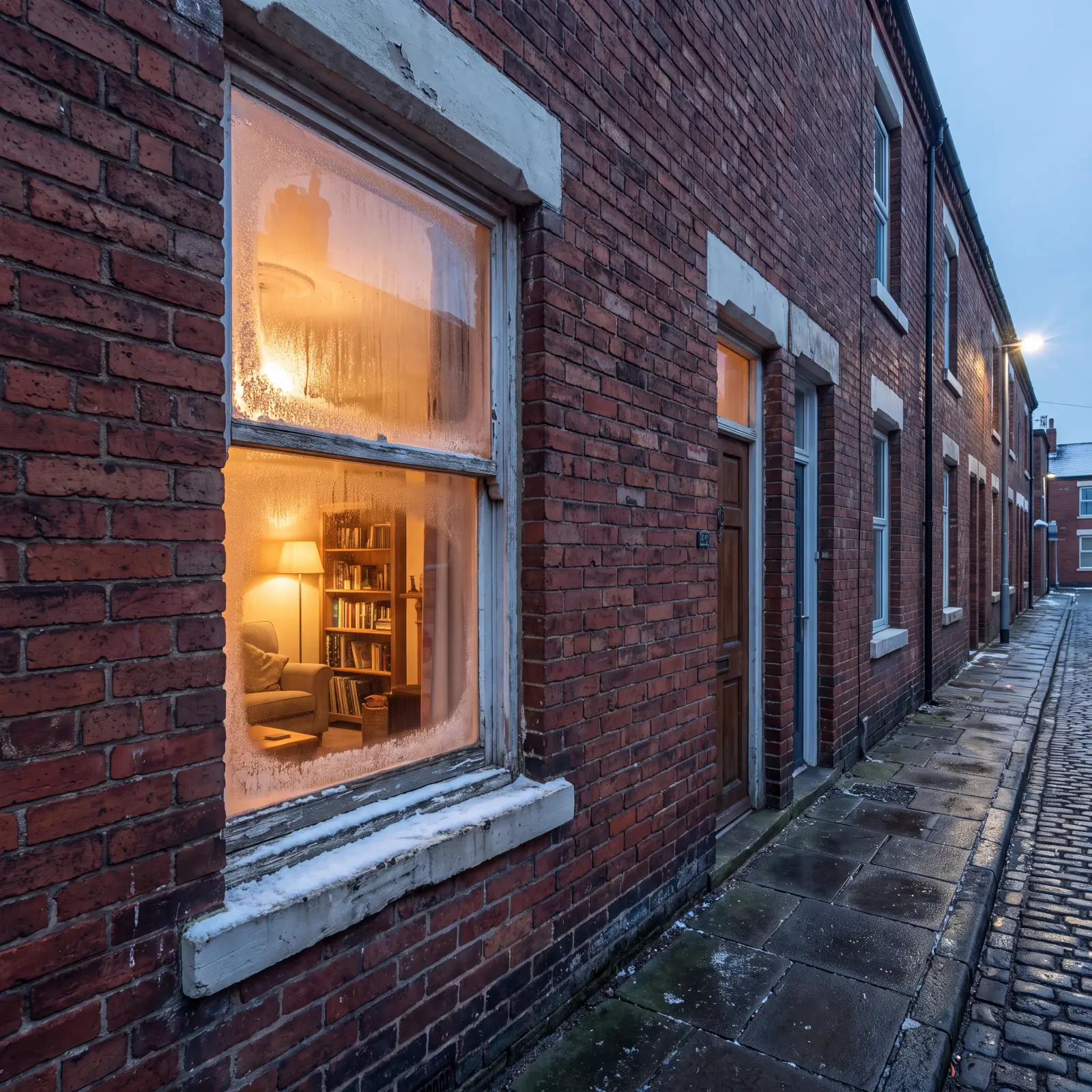
There's a window like it in most older Manchester houses. You know the one. Stand beside it on a January evening and you can feel cold air sliding off the glass while the radiator underneath fights a battle it can't win, and the heating bill never seems to come down. The Energy Saving Trust reckons up to 25% of a home's heat is lost through its windows and doors. In a city where winter sits in single figures from November to March, that's serious money drifting out through the glass.
In this guide we'll walk through how heat loss through windows happens, what it costs a typical Greater Manchester household, the warning signs we look for on surveys, and which upgrades buy back the most warmth for the least outlay.
How heat escapes through your windows
Gaps get all the blame, but they're only part of it. Heat leaves a window in four distinct ways, which explains why some of the popular quick fixes barely move the needle.
- Conduction. Heat travels straight through the glass and the frame. Single glazing conducts roughly five times faster than a modern A-rated double-glazed unit, and old aluminium frames with no thermal break are worse again.
- Convection. Warm room air touches cold glass, cools, sinks, and drags more warm air across to replace it. That's the draught you can feel from a window that's sealed shut.
- Radiation. Warm surfaces in the room radiate their heat towards the cold outdoors. Low-E (low emissivity) coatings on modern glass bounce that heat back into the room.
- Air leakage. Perished gaskets, dropped hinges and warped frames open up genuine gaps. On older windows this can be a surprisingly big slice of the total.
One number rolls most of this together. The U-value measures how many watts of heat pass through each square metre of window. Old single glazing sits around 5.0 W/m²K. Early 1990s double glazing manages about 3.0. A modern A++ rated window from our made-to-measure range achieves 1.2 or better, and triple glazing reaches 0.8.
What heat loss costs a typical Manchester home
So what does that mean in pounds? A typical 3-bed semi in Greater Manchester carries around 15-18 square metres of glazing. At 2026 gas prices, here's roughly what that glazing wastes each year, depending on what's sitting in the frames.
| Window type | Typical U-value | Approx. annual heat cost through glazing |
|---|---|---|
| Single glazing | 4.8-5.8 | £450-£600 |
| 1990s double glazing | 2.8-3.2 | £260-£340 |
| Modern A-rated double glazing | 1.2-1.4 | £110-£150 |
| Triple glazing | 0.8-1.0 | £75-£110 |
Those figures are estimates built on Energy Saving Trust methodology and average 2026 unit rates, so your own numbers will move with house size, orientation and heating habits. The pattern holds regardless. A house on tired 1990s units typically spends £150-£250 more every single year than the same house with modern glazing, and over a window's 25-30 year life that quietly becomes thousands of pounds. Before you even count the comfort.
Why Manchester homes are hit harder than most
The housing stock around here works against us. Greater Manchester holds one of the country's biggest concentrations of pre-1919 terraces and inter-war semis. Beautiful houses. Built, unfortunately, with big single-glazed openings and solid walls, and a lot of them were double-glazed in the 1980s and 90s with early uPVC that's now two decades past its best. If that sounds like yours, our guide to window problems in period properties covers the heritage-sensitive options.
Then there's the weather. Around 140 rainy days a year, persistent wind and a long heating season mean windows in the North West simply work harder than they do down south. Seals give up sooner, and the cost of a poor window shows itself faster.
Five signs your windows are bleeding heat
- Condensation on the inside of the glass most mornings, or mist trapped between the panes.
- A cold zone within a metre of the window, even when the rest of the room is warm.
- Curtains or blinds that stir on windy days with the window shut.
- Frames that have discoloured, warped or gone loose in their opening.
- A radiator under the window running flat out while the room never feels properly warm.
Sound familiar? Two or more of these usually means the sealed units, the gaskets or the frames themselves have failed. Sometimes a repair sorts it. Our repair and maintenance team swaps failed sealed units and perished seals every week of the year. When frames from the 90s are on the way out, though, replacement is normally the more economical route.
What fixes it properly
Heavy curtains and draught strips help at the margins, and we'd still do them this winter regardless. The step change comes from the glazing itself. Modern low-E glass, argon-filled cavities, warm-edge spacers and properly sealed, thermally efficient frames. Whether you lean towards uPVC or aluminium (our aluminium vs uPVC comparison weighs the two up), insist on an A-rated unit or better and a certified installation.
We fabricate windows in our own Trafford Park factory, so we control the spec that goes into every frame. And because we're local, we survey, manufacture and install across Greater Manchester and Cheshire without the long lead times the national chains carry.
Frequently asked questions
How much heat is lost through windows?
Windows and doors account for around 18-25% of total heat loss in an average UK home. The share climbs in homes with single glazing or failed double glazing, because the glass performs so much worse than the insulated walls around it.
Will new windows really lower my heating bill?
Yes. The Energy Saving Trust estimates a typical semi saves £140-£195 a year swapping single glazing for A-rated double glazing. Replacing failed 1990s units saves less, but it's still usually £100+ a year, on top of a warmer, quieter house.
Is secondary glazing or draught-proofing enough?
Draught-proofing is cheap and always worth doing, and secondary glazing earns its place in listed buildings where replacement is restricted. Neither touches conduction through old glass and frames, though, and that's the biggest single source of loss.
Double or triple glazing for Manchester?
A-rated double glazing is the value sweet spot for most Manchester homes. Triple glazing earns its keep on exposed elevations, north-facing rooms and bedrooms near busy roads. We recommend elevation by elevation rather than upselling the whole house.
How long does replacement take?
A typical whole-house replacement takes 1-2 days on site. Because we manufacture in Trafford Park, lead times usually run 2-3 weeks from survey rather than the 8-12 weeks you can wait with national suppliers.
Stop paying to heat the street
Prime Fabrication Windows, Doors & Glazing builds A++ rated uPVC and aluminium windows in Manchester and fits them across the North West with a 10-year guarantee. Tell us what you've got and we'll tell you what it's costing you, and what putting it right would save.
Call 07533 830717, WhatsApp us a photo for a fast quote, or request a free quote online.