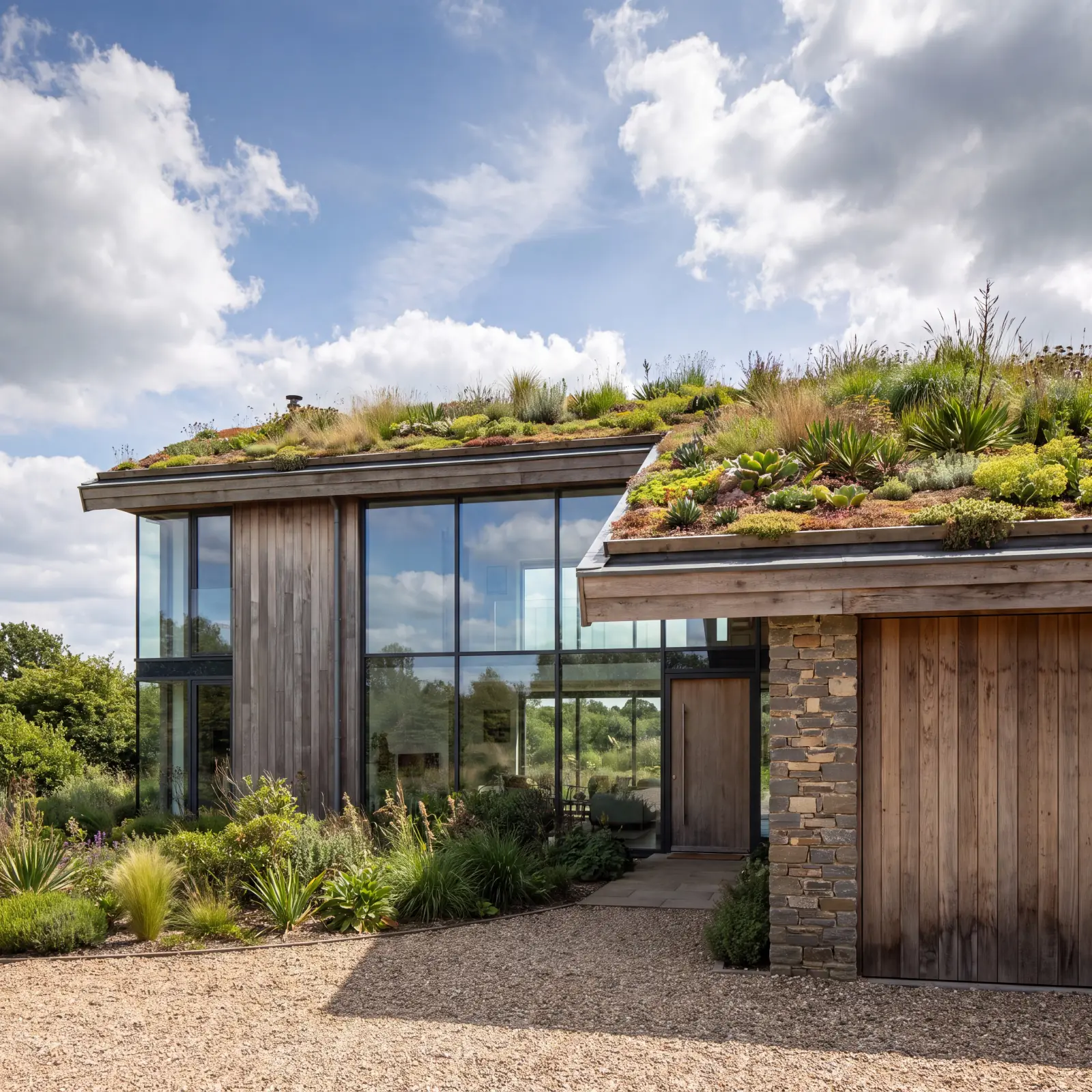
The average UK home puts out around six tonnes of CO₂ a year, and most of it comes from a single activity, which is heating. Manchester's housing stock, long on Victorian terraces and short on insulation, sits at the wrong end of that average. All of which makes the humble window an unlikely piece of climate technology. It's one of the few upgrades that cuts a home's emissions meaningfully and permanently while making the place nicer to live in.
So what's the carbon case for better glazing? We've pulled the numbers together, without the greenwash.
The carbon arithmetic of a window
Windows and doors account for roughly 18-25% of a typical home's heat loss. Replace single glazing or failed 1990s units with A++ rated windows and you cut the loss through the glazing by 60-80%. In a gas-heated Manchester semi that typically means 400-800kg of CO₂ avoided every single year. Roughly a return flight to southern Europe, repeated annually for the 30+ year life of the windows. Scale it across a whole street of upgrades and you're looking at the output of a small wind turbine.
But what about the carbon cost of making them?
A fair challenge, because manufacturing frames and glass takes energy. The embodied carbon of a typical replacement window sits around 50-150kg CO₂ depending on material and size. Set against annual operational savings of 400-800kg for a whole house, the carbon payback on replacing genuinely poor glazing usually lands well under two years. The rule of thumb is simple. Replacing failed or single glazing is a clear carbon win; scrapping sound modern windows for marginal gains is not. Efficiency first, vanity never.
Material choices and circularity
- Aluminium is infinitely recyclable, and recycling it takes ~95% less energy than primary smelting. Modern profiles increasingly carry high recycled content, and a 40-year frame life spreads the embodied carbon thin.
- uPVC is now widely recycled in the UK, with old frames becoming new profile cores up to ten times over. Ask your installer where stripped-out frames actually end up; ours go into recycling streams, not skips.
- Glass is endlessly recyclable, though sealed units need separating first, another industry process that has quietly matured.
- Local manufacturing trims transport emissions and keeps accountability close. Frames made in Trafford Park travel miles to site, not continents.
The specification that maximises carbon savings
Chase the whole-window U-value rather than slogans. That means an A++ rating or a U-value of 1.2 or better, Low-E glass, argon fill, warm-edge spacers and an airtight installation. On exposed or north-facing elevations, triple glazing pushes performance to 0.8. And spend where the losses actually are, because upgrading the three worst windows in a house often saves more carbon per pound than upgrading all ten mediocre ones. Our energy ratings explainer decodes the labels.
Beyond carbon: the co-benefits
Efficient windows cut more than emissions. Warmer internal surfaces put an end to condensation and mould, which means healthier air. Draught-free rooms stay usable in winter without space heaters. Acoustic performance improves alongside thermal, and a higher EPC band adds sale and remortgage value. One upgrade working for the planet, your health and your equity at the same time. Not many home improvements can claim all four.
A Manchester-sized opportunity
Greater Manchester has committed to carbon neutrality by 2038, which is ambitious for a region whose homes are among the UK's oldest. Retrofitting glazing is one of the few measures residents control directly, with no waiting on policy. No planning permission in most cases (see our planning guide), fitted in a day or two, and working from the first cold evening. If your windows are past their best anyway, the greenest window is the efficient one you were about to buy, specified properly. We manufacture A++ uPVC and aluminium windows locally and install across the region with a 10-year guarantee.
A worked example: one Chorlton semi
Numbers land better when they're attached to a real sort of house, so picture a typical 1930s semi in Chorlton. Twelve openings, half still carrying 1990s double glazing, plus a draughty back door. Replacing the six failed windows and the door with A++ units cuts the home's annual gas use by roughly 2,500-3,500 kWh, which is around 450-650kg of CO₂ a year and £150-£250 off the bills at 2026 prices. The embodied carbon of the new frames and glass comes to roughly 700kg, paid back in under 18 months of operation. Over the installation's 30-year life the net saving approaches 15 tonnes of CO₂. One ordinary house, doing one ordinary renovation, with no lifestyle change beyond being warmer. Multiply that across the tens of thousands of Greater Manchester homes still carrying failed glazing and the scale of the opportunity speaks for itself.
Frequently asked questions
How much CO2 do new windows save?
Replacing single or failed 1990s glazing with A++ windows typically avoids 400-800kg of CO₂ a year in a gas-heated semi, and more in larger or poorly insulated homes. Over a 30-year window life that adds up to 12-24 tonnes.
Are uPVC windows bad for the environment?
Less than their reputation suggests. Modern uPVC is recyclable up to ten times, UK recycling streams for old frames are well established, and the operational carbon a quality frame saves over 25-35 years dwarfs its manufacturing footprint. The real environmental sin is a cheap frame that fails early.
Is aluminium or uPVC more sustainable?
Both stack up when specified well. Aluminium wins on lifespan and infinite recyclability, while uPVC wins on lower embodied energy at manufacture. Longevity is the biggest factor of all, and a 40-year aluminium frame amortises its footprint superbly.
Do triple glazed windows save enough to justify themselves?
Environmentally, on exposed elevations, yes. The extra pane's embodied carbon pays back quickly in a hard-heated room. Economically the case is strongest for north-facing rooms, noise-affected bedrooms and homes heated by electricity.
Should I do windows or a heat pump first?
Fabric first is the established principle. Cut the heat demand, then decarbonise the heat source. Efficient glazing shrinks the heat pump you'll eventually need and helps it run efficiently, and unlike a heat pump, windows also fix noise, condensation and security while they're at it.
What happens to my old windows when they're removed?
Ask your installer directly, because practices vary. Ours are separated on site, with glass, metals and uPVC each entering recycling streams rather than landfill. It's worth making that a condition of any quote you accept.
Does window replacement improve my EPC rating?
Usually, yes. Glazing is one of the items assessors score directly, and moving from single or failed double glazing to A++ units typically contributes several points, sometimes enough to lift a band. That matters for sale value, remortgaging, and for landlords meeting minimum EPC requirements on rentals.
Cut your bills and your footprint in one job
A++ rated windows, made in Manchester, recycled responsibly at end of life and fitted with a 10-year guarantee. Book a free survey and we'll give you a straight, per-window efficiency recommendation.
Call 07533 830717, WhatsApp us a photo for a fast quote, or request a free quote online.