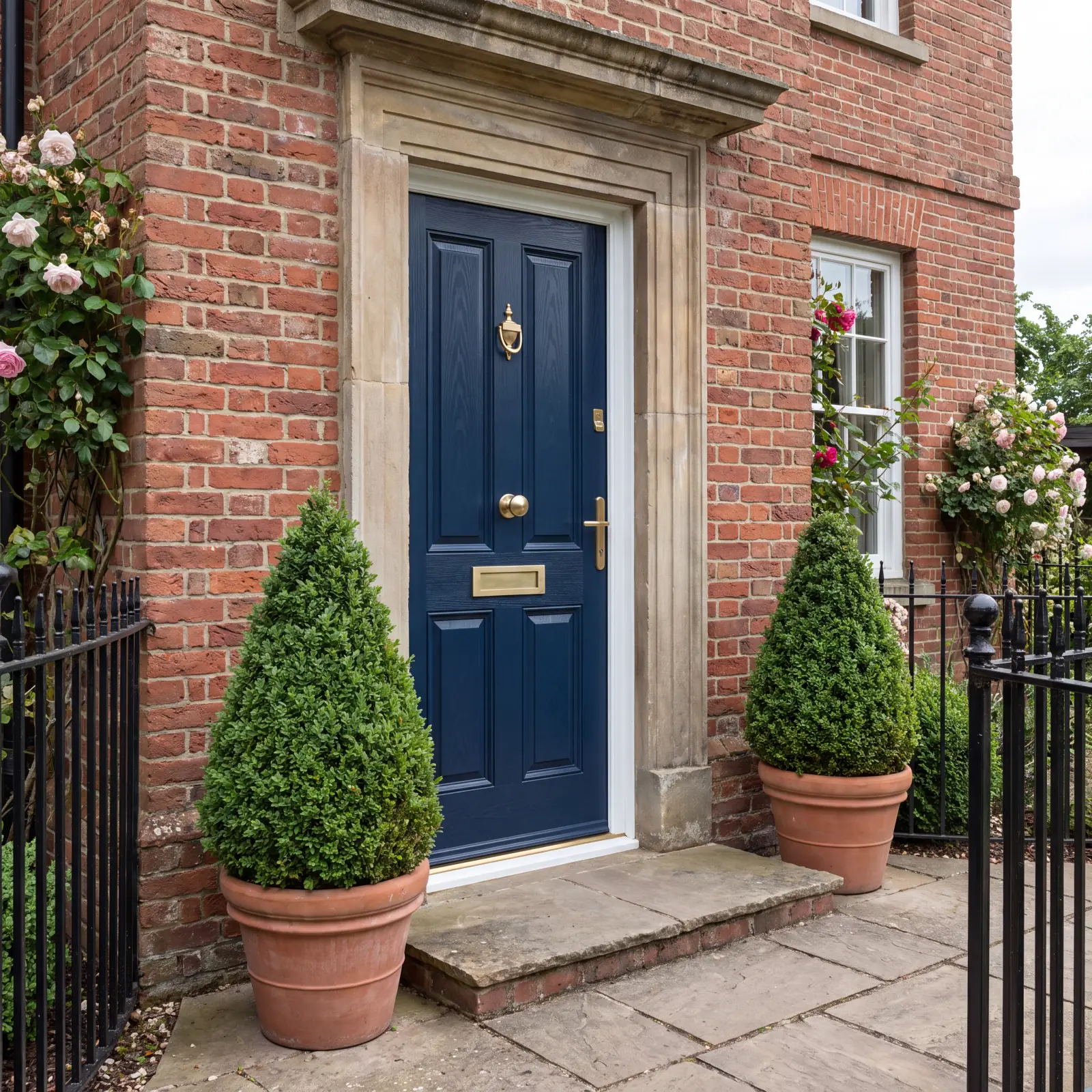
The composite door conquered the British front doorstep for a simple reason. It looks like an expensive timber door and behaves like neither timber nor uPVC, with no warping, no repainting and none of that flimsy panel flex. The prices, though, span a suspicious range. Doors that look identical are advertised anywhere from £700 to £3,000 fitted. So what do 2026 prices really look like, what creates the spread, and where within it is your money best placed? We fit these doors week in, week out, and the answers are more consistent than the adverts suggest.
The 2026 price bands
| Specification | Typical fitted price |
|---|---|
| Budget composite (foam core, basic hardware) | £900-£1,200 |
| Mid-range (quality foam core, 3-star cylinder, colour choice) | £1,200-£1,700 |
| Premium (solid timber core, designer glazing, full hardware) | £1,700-£2,500 |
| With side panel(s) or fanlight | add £400-£900 |
| French/double composite arrangements | £2,200-£3,500 |
For most Manchester homes, the mid band is where the value sits. The upgrades that actually matter over a budget door, meaning cylinder grade, hardware and finish quality, cost less than the badge premium of the top band.
What's inside the price
- The core. Budget doors use lower-density foam. Quality doors use high-density foam, which insulates superbly with U-values down to 1.0, or solid timber cores, which feel heavier and stronger and cost slightly more. Both work. Density and slab thickness, 44mm standard and 48mm-plus premium, are the numbers to ask for.
- The skin. GRP thickness varies more than the brochures admit, and thicker skins shrug off dents and UV-chalking for decades. Ask the skin gauge. Suppliers who know their product answer straight away.
- The cylinder. The lock barrel is where burglars attack. A 3-star anti-snap cylinder should be standard rather than a £60 upsell, and its absence tells you plenty about the rest of the spec.
- Glazing. Decorative and leaded designs add £100-£300, and every piece of glass in a door must be toughened or laminated safety glass by regulation.
- Colour and furniture. Standard colours are base price, premium and dual colours add 5-15%, and handles, knockers and letterplates in quality finishes add modestly while mattering every day.
- The frame and fitting. A composite slab hangs in a reinforced frame with a proper threshold, and the fitting quality decides draughts, alignment and lock feel for twenty years. This is the line where cheap quotes hide their savings.
Composite prices against the alternatives
uPVC panel doors run £650-£1,100 fitted. That's the budget answer, and an entirely respectable one for sheltered or secondary entrances, compared in full in our composite vs uPVC guide. Aluminium entrance doors start around £2,000 and climb, buying slim modern looks. Real timber remains beautiful at £2,500-plus, married to a maintenance schedule for life. Composite dominates because it's the middle path, offering timber's looks and uPVC's ease at a price between the two.
Where not to cut corners
Three items repay full price every time. The cylinder, anti-snap without exception, because most attacks target it. The fitting, meaning an experienced installer with time to square, pack and seal properly. And the guarantee, 10 years covering slab, colour and hardware, from a company likely to still answer the phone in year nine. The safe savings sit elsewhere. Skip designer glass in favour of plain or obscure safety glazing, choose standard colours, and shop the same specification factory-direct rather than through showroom brands. The same door frequently carries a four-figure spread between selling models, a pattern our whole pricing series keeps finding.
What a new front door does for the house
Pound for pound, nothing repays as visibly as the front door. It's the handshake of the house, in every listing photo and every first impression. Agents consistently rank smart front doors among the cheapest kerb-appeal wins going, and a £1,400 door reads as a cared-for house in a way £1,400 spent almost anywhere else simply can't. Colour-match or complement your window frames and the whole elevation pulls together. We fabricate and fit both across Greater Manchester, guaranteed for 10 years.
Timing and process
A composite door is one of the gentlest projects in home improvement. Survey, two to four weeks' manufacture, then a half-day fit where the old door only comes out once the new set is on site, so the house is never doorless. Winter fitting is routine, with the opening exposed for well under an hour, and because demand peaks before Christmas and again in spring, shoulder-season orders move fastest. One tip from long experience: choose colour and glazing from physical samples in daylight, held against your actual brickwork, never from a screen. Door colours shift dramatically between renderings and reality, and this is a decision you'll greet every day for thirty years. We bring sample corners and glazing cassettes to every survey for exactly this reason.
Frequently asked questions
How much does a composite front door cost fitted in 2026?
£900-£1,200 for budget specifications, £1,200-£1,700 for the mid-range band most homes should target, and £1,700-£2,500 for premium solid-core doors, plus £400-£900 for side panels. Factory-direct pricing sits at the lower edge of each band for equal spec.
Why do composite door prices vary so much?
Core density and thickness, GRP skin gauge, cylinder grade, glazing design and, above all, the selling model. Showroom brands routinely charge four figures more than fabricator-direct pricing for equivalent doors.
Are cheap composite doors worth buying?
The £700-£900 end usually means thin skins, low-density cores and non-rated cylinders, differences you feel in year five rather than day one. Stretching to the mid band buys the components that make composites worth having in the first place.
What's better in a composite door - foam or timber core?
High-density foam insulates best, with U-values around 1.0, and suits most homes. Solid timber cores feel heavier and suit period looks and hard-used doors. Both beat uPVC panels decisively, and density and thickness matter more than the core type.
How long does a composite door last?
30-plus years for a quality slab. The GRP skin resists weather, dents and fading far beyond painted timber, with nothing to sand or repaint. Hardware and seals are the serviceable items, and they're easily maintained.
Does a new front door add value to a house?
Pound for pound it's among the best improvements going. It anchors kerb appeal, photographs the house's care level, and estate agents cite it consistently. A mid-range composite recoups its cost in impression alone on most sales.
What colours are popular for composite doors in 2026?
Anthracite and black lead modern schemes, navy, racing green and deep reds dominate traditional ones, and sage and olive tones are the fast risers. Dual colour, bold outside and white inside, is increasingly standard. Choose from physical samples in daylight, because screen renderings mislead.
Price your door properly
Pick a style and colour and we'll quote it factory-direct, with core spec, skin, 3-star cylinder and fitting all itemised in writing, matched to your windows and guaranteed for 10 years.
Call 07533 830717, WhatsApp us a photo for a fast quote, or request a free quote online.