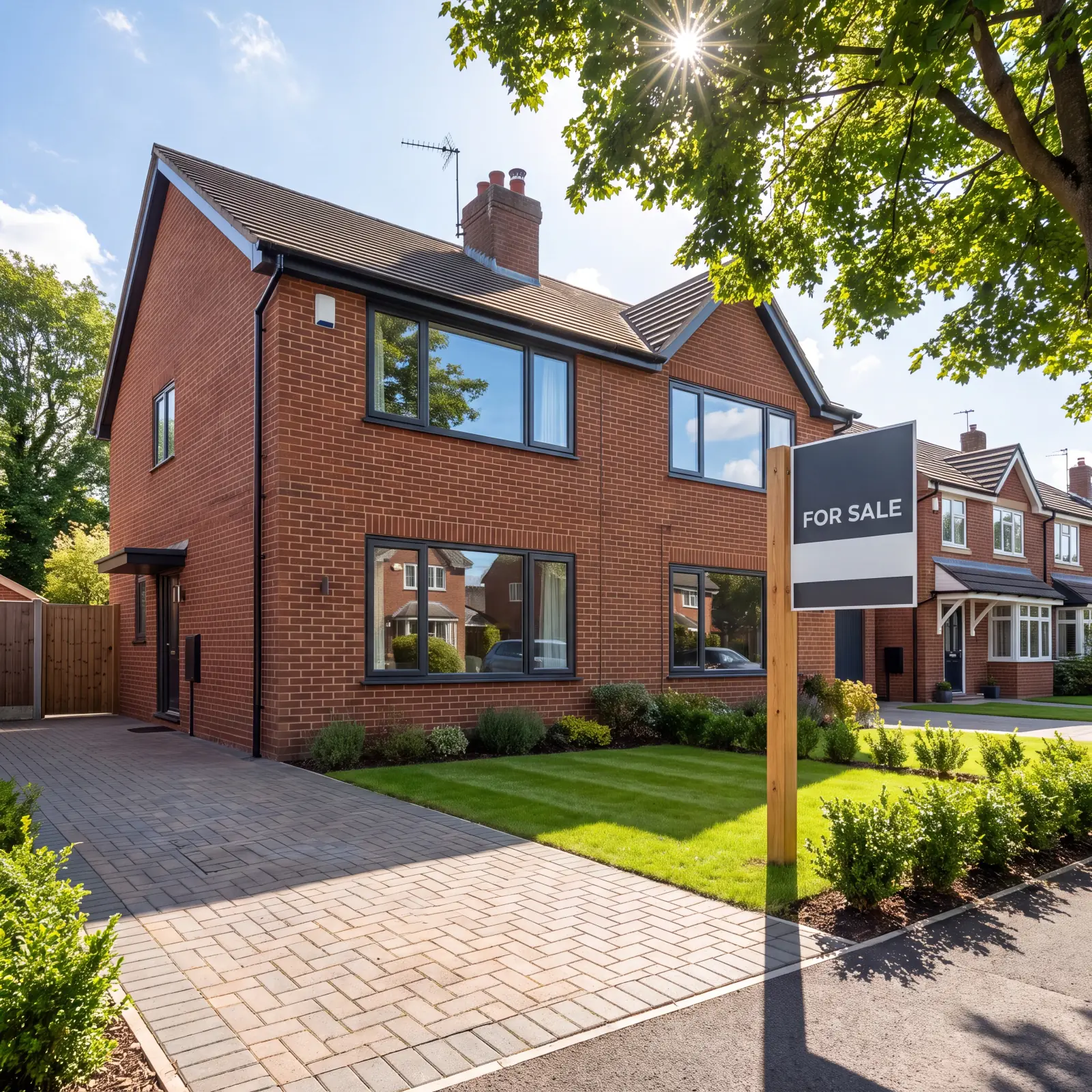
Ask whether new windows add value and you'll hear everything from 'you get it all back' to 'you never recover home improvements'. Both answers are wrong, because the question quietly bundles four separate effects together. There's the price effect, the speed-of-sale effect, the negotiation effect, and the years of lower bills before any sale happens. Pull them apart and the picture becomes genuinely useful.
The headline numbers
UK property studies consistently place double glazing among the improvements buyers will actually pay for. Industry and agent surveys put the uplift from replacing poor windows at 5-10% of value where the existing glazing is visibly failing. On a £280,000 Manchester semi, that's £14,000-£28,000 against a typical £5,000-£8,000 whole-house replacement. For homes whose windows are merely middle-aged, the effect shrinks and the case rests on the other three effects instead. New windows aren't an investment scheme. They're an improvement that largely, and often fully, pays for itself when the starting point is bad.
The EPC channel: quietly getting stronger
Energy ratings moved from paperwork to pricing during the energy-crisis years. Portals now display EPCs prominently, buyers increasingly filter by them, and lenders offer better rates on efficient homes. Glazing is one of the items assessors score directly, and moving from failed or single glazing to A++ units contributes points that can lift a band. And bands sell. Analyses of UK sales repeatedly show higher-band homes achieving premiums of several percent over identical lower-band neighbours. Landlords have a compliance angle on top, with minimum-EPC rules tightening on rental stock. For the specification detail, see our energy ratings guide.
The negotiation effect: defence, not offence
This is the effect owners underestimate most. Bad windows don't just fail to add value, they subtract it, with interest. Surveyors flag failed units and rotten frames, and buyers respond with reductions that routinely exceed the real repair cost, because uncertainty always gets priced pessimistically. A £3,000 glazing problem becomes an £8,000 renegotiation. Replacing failing windows before a sale isn't gilding the lily. It's taking the crowbar out of the buyer's hands. Even just swapping misted units before listing is some of the cheapest defence money can buy.
The kerb appeal multiplier
Why do agents photograph the front of the house first? Because buyers decide in seconds whether to book a viewing, and windows dominate that photograph. Tired frames age the whole facade while crisp ones refresh it, an effect our before-and-after tour shows house type by house type. Kerb appeal doesn't just nudge the price. It multiplies viewings, and viewings are what create competing offers.
What maximises value per pound
- Replace visibly failing windows before listing, the ROI case is strongest where the 'before' is worst
- Match style to the street: heritage looks on period houses protect the buyer pool that pays premiums
- Keep the paperwork, FENSA certificates and guarantees transfer confidence (and often the guarantee itself) to buyers
- Don't gold-plate for sale: A++ double glazing satisfies buyers; triple glazing rarely returns its premium at sale
- If you're staying, weigh value alongside bills and comfort, the annual savings accrue to you, not a future buyer
So what's the verdict?
Selling soon with bad windows? Replacement comes close to self-financing once you combine the price effect, the negotiation defence and the faster sale. Selling with decent windows? Spend nothing beyond a good clean. Staying a decade? Then value becomes the bonus rather than the point, because you'll bank the energy savings and the comfort for years, and the equity effect is still waiting whenever you do sell. In every scenario, buy once and buy well. A 10-year guarantee from a local fabricator is itself a document buyers like to see.
A Manchester worked example
Picture a three-bed 1930s semi in Stockport, listed at £285,000, with visibly failed 1990s glazing. Two misted bays, yellowed frames, a draughty back door. Comparable modernised houses on the street achieve £295,000-£300,000 and sell in half the time. The vendor spends £6,200 on a full A++ uPVC replacement with a structural bay rebuild and a composite door. Now the house photographs like the modernised comparables, the survey comes back clean on glazing, there's no renegotiation, and it sells near the top of the range within a month. Against doing nothing, the improvement roughly washed its face on price alone, and everything saved on the avoided price-chip, the avoided extra month of mortgage and bills while unsold, and the stronger buyer pool was pure gain. That's the realistic shape of windows adding value. Not a lottery win, but one of very few improvements where the downside is this well protected.
Frequently asked questions
How much value do new windows add to a house?
Where the existing windows are visibly failing, studies and agent surveys suggest 5-10% of value. Where they're adequate, less. Add in the negotiation losses avoided and the faster sale, and replacing poor glazing typically recovers most or all of its cost.
Do buyers really care about windows?
Emphatically. They're among the first things viewers touch and surveyors report on, and buyers read windows as a proxy for how the whole house has been maintained. That's why tired frames invite low offers on otherwise good homes.
Does a better EPC rating increase house value?
UK sales analyses consistently show higher EPC bands achieving premiums of several percent, and the effect has strengthened as energy costs and lender green incentives have grown. Glazing is one of the directly scored components.
Should I replace windows before selling my house?
If they're failed, misted or rotten, usually yes, or at minimum replace the failed glass units. If they're sound but merely unfashionable, spend nothing. You won't recover style-only upgrades from buyers who may have plans of their own.
Is triple glazing worth it for resale?
Rarely for resale alone. Buyers pay for 'new efficient windows', not for the increment between double and triple. Buy triple for comfort, noise or exposed elevations if you're staying put, and A++ double if you're selling.
Do window guarantees transfer to new owners?
Ours does, and good ones generally can, though always check the terms. A transferable 10-year guarantee with FENSA paperwork makes a genuinely useful pack for a buyer's solicitor and removes a whole category of pre-completion queries.
Selling, staying, or deciding?
Tell us which and we'll advise accordingly. Sometimes the answer is £300 of replacement glass units before you list, and sometimes it's the full transformation. Free surveys across Greater Manchester, windows made in Trafford Park, 10-year transferable guarantee.
Call 07533 830717, WhatsApp us a photo for a fast quote, or request a free quote online.