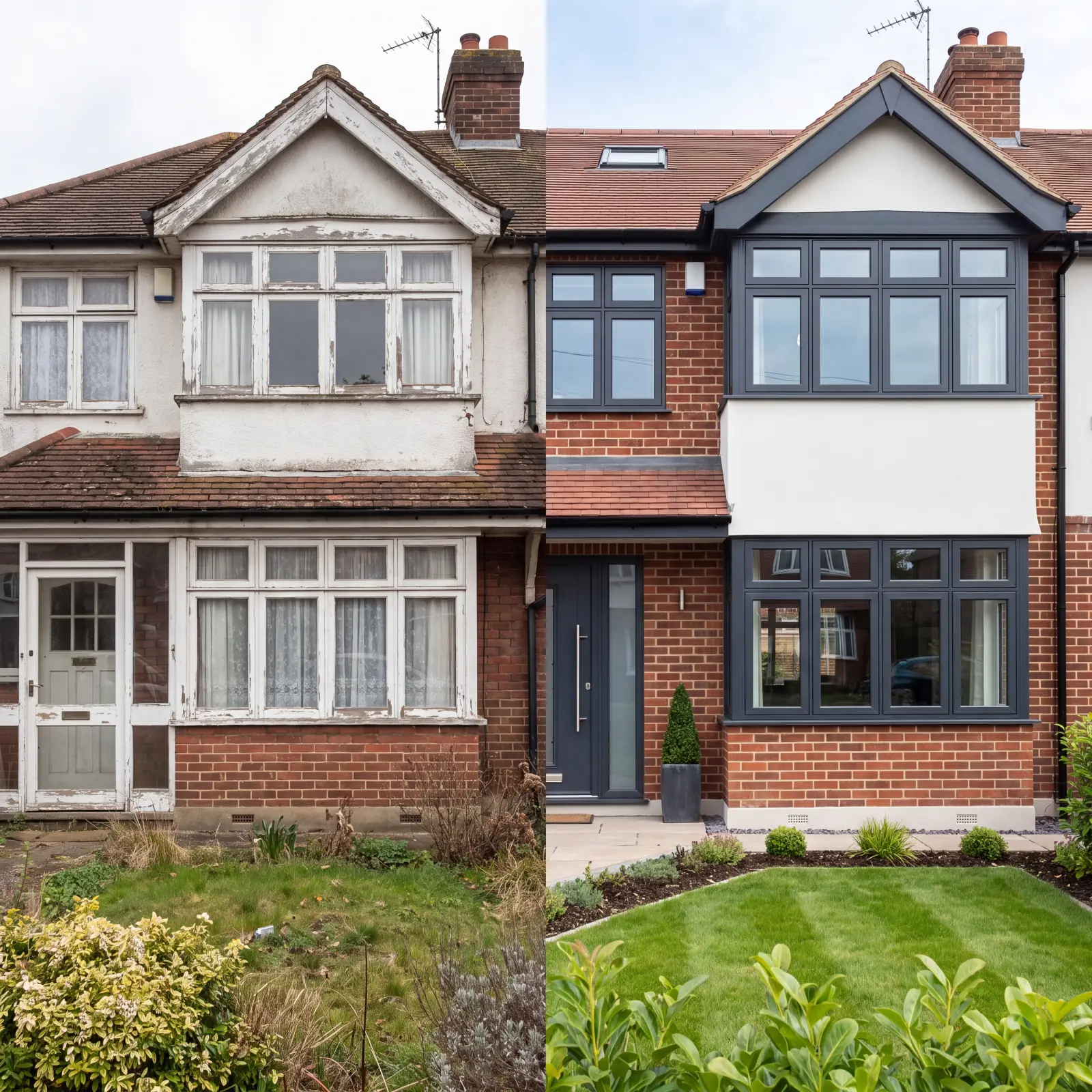
Nothing changes a house's face like its windows. A new kitchen transforms one room. New windows transform the photograph the whole street sees, and the way every room feels from the inside. Yet because the change happens over a day or two, people consistently underestimate it right up until they watch it happen to their own house.
What follows is a tour of the transformations that come through our factory week in, week out across Greater Manchester. The house types, what changed, and what each owner noticed first. The full photo gallery lives on our projects page.
The 1930s semi: from tired to timeless
The classic Manchester semi, bay-fronted in brick and render, suffers worst from discoloured 1990s uPVC. Yellowed frames against white render age the entire facade. The standard transformation is crisp white or light-grey uPVC with a properly structural bay replacement, or a step up to flush casements for a quietly premium finish. Owners almost always say the same thing first, that the house looks freshly rendered, even though the render never changed. A month later comes the second comment, and it's about the gas bill.
The Victorian terrace: character restored
Terraces hurt most when a previous owner has forced chunky casements into openings designed for elegant sashes. The proportions fight the architecture, and everyone senses it even if they can't name it. Fitting heritage vertical sliders with correct proportions and glazing bars puts it right, and the house stops arguing with its neighbours and rejoins the street. It's the make-or-break decision we cover in our Victorian windows guide, and the one place where spending on authentic detailing repays itself in kerb appeal.
The 1960s, 70s house: the anthracite effect
Post-war houses have big, honest openings that carried aluminium or early uPVC badly. They're also the houses most flattered by the modern palette. Anthracite grey frames, larger panes, a matching composite door, and a dated elevation becomes a contemporary one without a single brick being touched. Of all the house types we work on, this before-and-after is the most dramatic. It's the transformation that's been filling our order book since the early 2020s, and demand shows no sign of slowing.
The premium renovation: glass as architecture
Around Hale, Bowdon, Didsbury and the Cheshire fringe, transformation increasingly means slimline aluminium. Floor-to-ceiling glazing, corner glass, sliders that turn the garden into the living room's fourth wall. On these jobs the windows aren't refreshing the architecture. They are the architecture, and the before-and-after photographs look like two different houses.
What every transformation has in common
- Speed. A typical house transforms in 1-2 days on site, so the before and after photos are often taken in the same week.
- Light. Modern frames are slimmer than what they replace, so every opening gains glass. Owners notice brighter rooms before they notice warmer ones.
- Quiet. The acoustic change surprises people most, especially near main roads. New sealed units and gaskets drop noise noticeably.
- The bills. The invisible transformation. A++ glazing cuts heat loss dramatically, and winter comfort changes character entirely.
- Value. Estate agents photograph the front of the house first for a reason, because kerb appeal prices in.
Planning your own before-and-after
Three decisions dominate the outcome. Colour first. Photograph your house and mock the options up honestly, because anthracite flatters render and modern brick, white and creams flatter period stock, and black demands confidence. Then style, which should match the architecture, flush or heritage for character streets and clean casements for everything else. And finally consistency. Transformation comes from the whole elevation changing at once, so if budget forces phasing, phase by elevation and never window by window, or the house spends years looking half-done.
Send us a photo of your house and we'll tell you straight which transformation it's a candidate for, what it costs, and what to avoid. Every project is manufactured in Trafford Park and installed by our own teams across the region.
The transformations that go wrong (learn from them)
For balance, here are the befores-and-afters nobody frames. White uPVC casements dropped into a Victorian bay, shrinking graceful openings into squat panels. A single elevation done in a different white from the rest, visible forever in afternoon light. Anthracite chosen from a 5cm swatch that reads nearly black across a whole facade. Bars and leading stuck onto a plain 1980s house that never had them, adding clutter instead of character. Every one of these was cheaper or quicker than the right choice at the time, and every one costs more to live with. What connects them? Deciding from a brochure instead of from the house. It's why we bring full-size corner samples and photo-based mock-ups to surveys, and why ten minutes spent holding a sample against your own brickwork is the best-value part of the entire project.
Frequently asked questions
How long does a full house window replacement take?
One to two days on site for a typical semi or terrace, after two to three weeks' manufacture from survey. Each opening is out and reglazed within the hour, so the house is never left open to the weather.
What window colour adds most kerb appeal?
It depends on the house. Anthracite grey transforms render and post-war brick, whites and creams suit period properties, and woodgrain foils flatter cottages. The reliable rule is contrast with the wall colour and consistency across the whole elevation.
Should I replace all windows at once or in stages?
All at once gets better pricing and a single disruption. If you must phase, do complete elevations, the front first for kerb appeal or the weather-facing side for comfort, rather than scattering new windows among old ones.
Do new windows really change how a house looks?
More than any other single improvement. Frames take up a surprising share of a facade, and their colour, proportion and condition set the age of the whole house at a glance. That's why before and after photos so often look like different properties.
Can I see examples of your work near me?
Yes. Our projects gallery covers work across Greater Manchester and Cheshire, and for larger jobs we can usually point you to installations in your area that you can view from the street.
Will new windows look too modern on my older house?
Only if they're mis-specified. Heritage-style sliders, flush casements, period colours and authentic bars exist precisely so older houses get modern performance without losing their face. Matching style to architecture is the whole game.
Want to see your house's 'after'?
Send us a photo of your frontage. We'll advise on style and colour, show you comparable local projects, and quote the transformation, manufactured in Manchester, fitted in days and guaranteed for 10 years.
Call 07533 830717, WhatsApp us a photo for a fast quote, or request a free quote online.