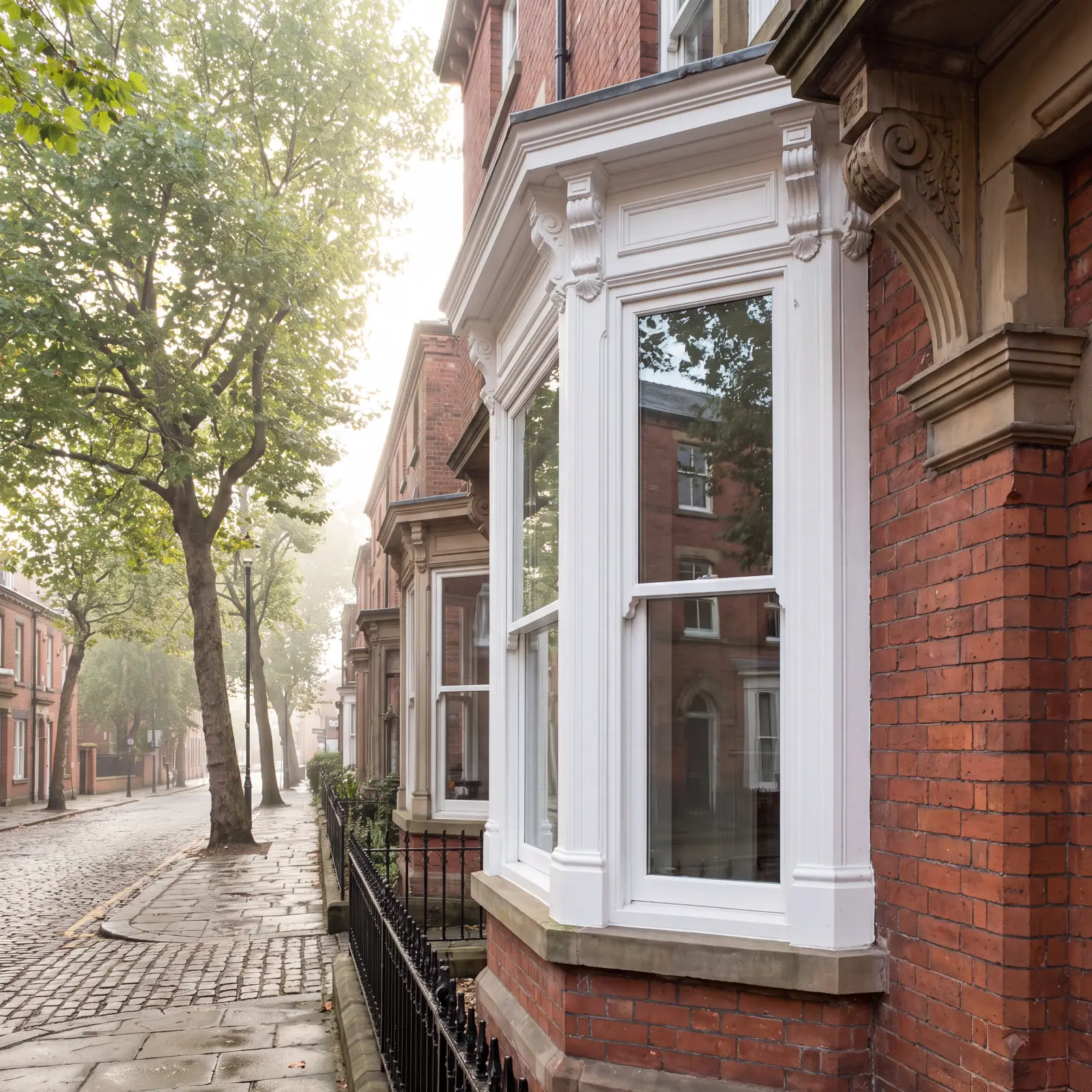
For most houses, replacing windows with a similar appearance needs no planning permission at all. It falls under permitted development. But 'most' is doing some quiet work in that sentence, because conservation areas, listed buildings, flats and Article 4 streets all change the rules, and Greater Manchester has plenty of all four.
So let's take it properly, including the building regulations side, which catches far more people out than planning ever does.
When you don't need planning permission
You can normally replace windows without any application when all of the following are true:
- The property is a house (not a flat or maisonette)
- It isn't listed and isn't in a conservation area with an Article 4 direction
- The new windows look broadly similar to the ones coming out, in proportion and finish, viewed from the street
- You're not enlarging the opening or adding a new opening that faces a neighbour
'Similar appearance' is more forgiving than people fear. Swapping rotten timber for uPVC or aluminium is fine in the vast majority of streets, and so is going from white frames to anthracite. In ordinary areas, councils care about proportion and character rather than material.
The exceptions that matter in Greater Manchester
- Conservation areas. Basic conservation areas still allow like-for-like replacement, but plenty of desirable areas, including parts of Didsbury, Chorlton, Altrincham, Hale and Bowdon, carry Article 4 directions that strip out permitted development rights. There, a change of window style or material usually needs planning permission.
- Listed buildings. Any window replacement needs listed building consent, no exceptions. Unauthorised work is a criminal offence, not merely a planning breach. Slim-profile heritage designs and secondary glazing are the usual routes, and our period property windows guide covers them.
- Flats and maisonettes. Flats have no permitted development rights for windows, so technically any visible change needs permission, plus the freeholder's consent. In practice, like-for-like swaps usually go through without drama.
- New openings. Enlarging an opening, or adding a first-floor side window, often triggers planning rules along with obscure-glazing requirements for overlooking.
Not sure about your street? Ten minutes on your council's website, searching 'conservation areas' plus the borough name, settles it. So does one call to the planning duty desk. We check this for customers during survey as a matter of course.
Building regulations, the rules every replacement must follow
Planning is one thing. Building regulations are another entirely, and every replacement window in England has to comply. That's been non-negotiable since 2002, and since 2022 the bar sits higher:
- Thermal performance: new windows must achieve a U-value of 1.4 W/m²K or better (or Window Energy Rating band B+)
- Safety glazing: toughened or laminated glass in doors, beside doors, and below 800mm sill height
- Fire escape: habitable first-floor rooms generally need at least one window with a clear opening large enough to escape through
- Ventilation: replacements must not make ventilation worse, and trickle vents are now required in most cases
Compliance is proved by a certificate, either from building control directly or, far more commonly, a FENSA certificate issued automatically when a registered installer does the work. No certificate means grief when you sell. Buyers' solicitors ask for it, and you'll end up buying indemnity insurance or retro-certifying.
What this means in practice
| Your situation | Planning permission? | Building regs certificate? |
|---|---|---|
| Ordinary house, like-for-like replacement | No | Yes. FENSA or building control |
| House in conservation area (no Article 4) | Usually no | Yes |
| Conservation area with Article 4 direction | Usually yes | Yes |
| Listed building | Listed building consent required | Yes |
| Flat or maisonette | Technically yes if appearance changes | Yes |
How we handle it for you
Every Prime Fabrication Windows, Doors & Glazing installation across Greater Manchester and Cheshire is certified as standard, and the compliance paperwork arrives without you chasing it. For conservation streets we make heritage-style flush and sash-look windows in our Trafford Park factory that keep planners happy while performing like modern glazing. And if your street needs an application, we'll flag it before you've committed a penny.
Conservation-friendly designs that pass first time
Live in an Article 4 area? Then the game is won at the design stage. Planning officers approve windows that respect the street's proportions and detailing, and modern manufacturing can deliver exactly that without timber's maintenance burden:
- Flush casements that sit level with the frame, echoing traditional timber joinery rather than the stepped look of standard uPVC
- Vertical sliding sash designs in uPVC or aluminium, with authentic proportions, deep bottom rails and slim meeting bars
- Mechanical or bonded glazing bars in period patterns, rather than stick-on strips that fool nobody
- Heritage colour palettes, from creams and sage greens to off-blacks, plus woodgrain foils that read as painted timber from the pavement
A well-prepared application with drawings of a sympathetic design usually goes through without fuss. Applications cost little (a householder application runs around £260 in 2026), take roughly eight weeks, and we can supply the specification sheets and elevations yours needs.
One last reassurance. The enforcement horror stories almost always involve listed buildings or a blatant disregard of an Article 4 direction, not ordinary homeowners making reasonable replacements. Councils have discretion, and a genuine mistake on an ordinary street typically ends in a retrospective application rather than an order to rip windows out. Do the ten-minute check, keep your certificates, and window replacement stays one of the most straightforward improvements a home can have.
Frequently asked questions
Do I need planning permission to replace windows like for like?
In an ordinary house, no. It's permitted development. The common exceptions are listed buildings, flats, and conservation areas with Article 4 directions, where an application or consent is needed.
Can I change from timber to uPVC without permission?
In most streets, yes, provided the new windows look broadly similar. In Article 4 conservation areas and listed buildings, material changes are precisely what the rules restrict, so check first.
What happens if windows were fitted without a FENSA certificate?
The windows aren't illegal to live with, but you'll struggle at sale. Your options are retrospective building control approval or indemnity insurance. Using a registered installer sidesteps the whole issue.
Do new windows need trickle vents by law?
Under the 2022 regulations, in most cases yes. Certainly if the old windows had them, and usually even if they didn't, unless another ventilation route exists. Modern trickle vents are far more discreet than the 1990s versions.
Who checks that replacement windows meet building regulations?
A FENSA-type registered installer self-certifies and notifies your council automatically. Otherwise you must involve building control directly and pay their inspection fee.
How long does planning permission for windows take?
A householder application typically runs around eight weeks from validation to decision, plus the time to prepare drawings. Factor it into your project if you're in an Article 4 conservation area, and remember most streets need no application at all, so check before assuming the wait applies to you.
Not sure what your street allows?
Give us your postcode and we'll check conservation status and compliance requirements as part of a free survey, then make windows that satisfy the planners and your heating bill at the same time.
Call 07533 830717, WhatsApp us a photo for a fast quote, or request a free quote online.