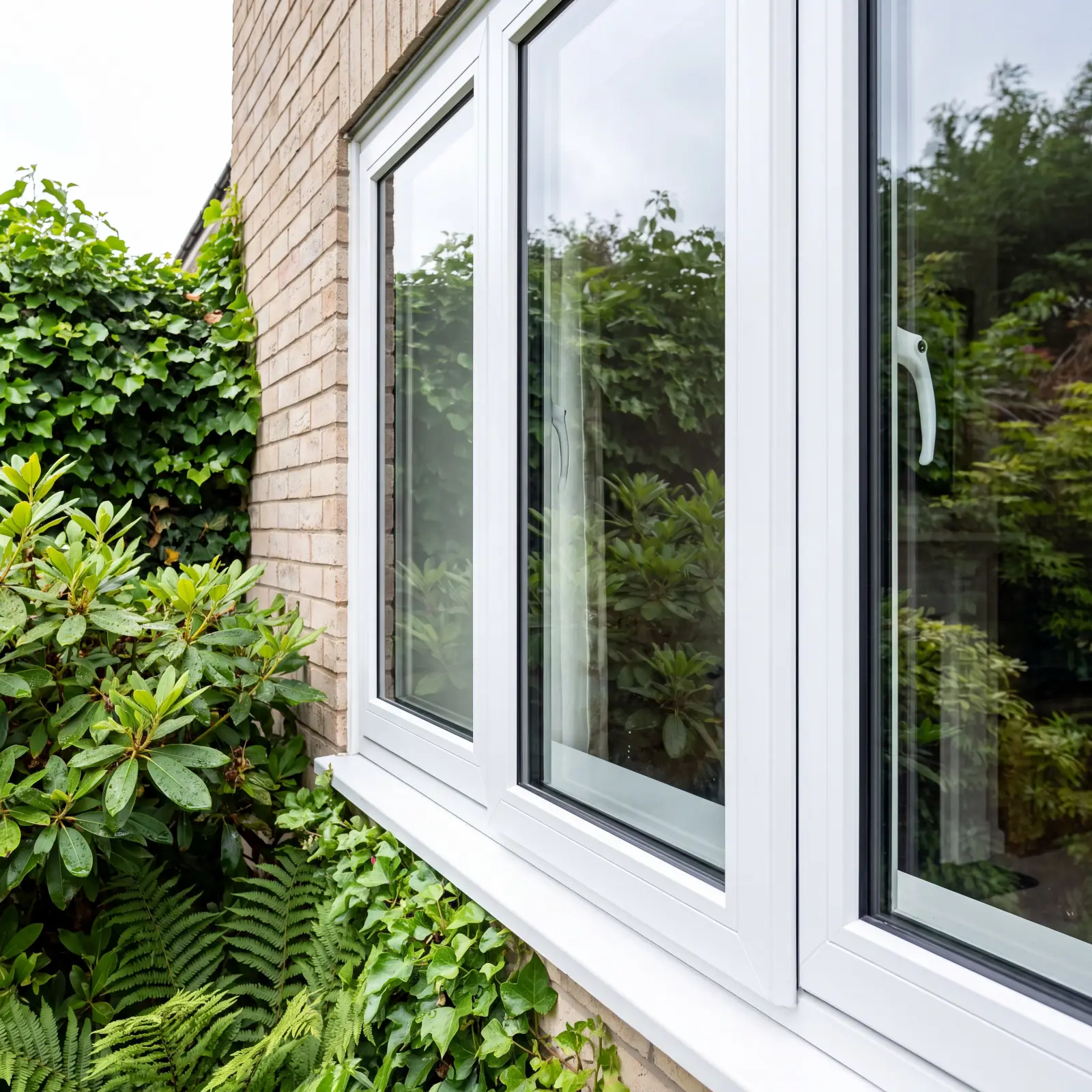
Put the question to ten window firms and you'll hear everything from 'ten years' (usually from someone selling replacements) to 'forever' (usually from someone selling uPVC). The truth sits in between. A well-made, well-fitted uPVC window lasts 20 to 35 years, but the parts inside it age at different speeds, and the quality of the original frame can swing the answer by a decade.
So let's get into what determines uPVC lifespan, the warning signs yours are approaching the end, and how we'd call the choice between repairing and replacing.
How long uPVC windows really last, part by part
| Component | Typical lifespan | What failure looks like |
|---|---|---|
| uPVC frame (quality, reinforced) | 25-35 years | Discolouration, brittleness, warping |
| uPVC frame (budget, unreinforced) | 15-20 years | Sagging sashes, bowing profiles |
| Sealed glass units | 15-25 years | Misting between panes |
| Gaskets and seals | 10-15 years | Draughts, water ingress |
| Hinges, handles, locks | 10-20 years | Stiffness, dropped sashes, lock failure |
Notice something? The frame usually outlives everything inside it. That's why a 15-year-old window with misted glass often needs nothing more than a glass-only replacement or fresh seals rather than a whole new window, and why a proper survey matters before you spend a penny.
What shortens a uPVC window's life
- Budget profiles. Thin-walled, unreinforced frames from the cheap end of the market flex, and flexing breaks seals. More than anything else, this decides whether a window fails at 15 or sails past 30.
- South- and west-facing sun. UV slowly embrittles uPVC and fades foiled finishes. Modern frames are far more UV-stable than the 1990s generation.
- Poor installation. A frame fitted out of square carries permanent stress, so locks and hinges wear years ahead of schedule.
- No maintenance. uPVC is low-maintenance, not no-maintenance. Dry hardware and blocked drainage slots quietly kill windows.
- North West weather. Driving rain and wind-loading test seals harder in Manchester than almost anywhere else in the country.
Signs your uPVC windows are on borrowed time
One failed component is a repair. A cluster of them is a window telling you it's done.
- Frames that have yellowed, chalked or feel brittle to the touch
- Misting between the panes that comes back even after units have been swapped
- Draughts that persist after new gaskets, which means the frame itself has moved
- Sashes that catch, drop or need a lift before they'll lock
- Cracks at the corner welds, a structural failure with no repair
- Rooms noticeably colder and noisier than they used to be
Seeing several of these at once? Our guide to the hidden costs of old uPVC windows breaks down what keeping them really costs in heat and repairs.
Repair or replace? The rule we work to
Under 15 years old with a single fault, say a misted unit, a stiff lock or a perished gasket? Repair it. Our repair team fixes these daily and it costs a fraction of replacement. Over 20 years old with multiple faults, replace. You'll spend more chasing failures one by one than the window is worth, and you'll keep paying its energy penalty all the while. A pre-2002 window typically loses more than twice the heat of a modern A-rated one.
Between 15 and 20 is judgement territory. Our rule of thumb is simple. Frame sound and square, repair. Frame moved or welds cracking, replace. A free survey costs nothing, and our repair-first policy means we don't push replacements nobody needs.
Making the next set last 30+ years
If replacement is the answer, buy once and buy well. That means reinforced multi-chambered profiles, A-rated (or better) sealed units with warm-edge spacers, quality hardware, and a fitter who'll still exist in ten years. We fabricate frames in our own Manchester factory, so every window we install is made for its exact opening and covered by a 10-year guarantee. And we're 20 minutes away if anything ever needs adjusting.
What happens if you do nothing?
Old windows don't fail politely. They fail expensively, and usually three ways at once. Energy first. A failed 1990s unit loses two to three times the heat of a modern A++ one, which across a whole house means £150-£250 a year quietly added to bills. Then repairs. Once a frame starts moving, faults arrive in clusters. A £90 hinge this winter, a £120 misted unit in spring, a lock barrel by autumn, and each fix buys less time than the last. Then the house itself, because condensation from cold, leaky glazing feeds mould on reveals and rots sills and plaster. Surveyors notice.
There's a timing cost too, and most people find it out too late. Window failure loves the first cold snap of winter, which is exactly when every glazier in Greater Manchester is busiest and lead times stretch longest. Plan a replacement while your old windows still limp along and you choose the timing, compare quotes calmly, and never spend a week staring at a boarded-up opening. Wait for the failure and you do all of it in a hurry. In December.
If your windows are past 20 and showing several of the warning signs above, the question isn't really whether to replace them. It's whether you'd rather do it on your schedule or theirs.
Frequently asked questions
How long do uPVC windows last on average?
20-35 years for the frames. Quality of the original profile, sun exposure, installation accuracy and basic maintenance decide which end of that range you land on. Sealed units and moving parts typically want attention earlier, at 10-20 years.
Do uPVC windows go yellow?
Modern uPVC is heavily UV-stabilised and stays white for decades. Frames from the 1980s and 90s used less stable formulations, which is why older windows often look cream or grey. Yellowing can't be reversed. It means the plastic itself is degrading.
Can you repair misted double glazing without replacing the window?
Yes. Provided the frame is sound, the sealed glass unit can be swapped on its own, usually within the week and at far lower cost than a new window. It's one of the most common repair jobs we do across Greater Manchester.
Are new uPVC windows better than 20-year-old ones?
Substantially. A 2026 A++ window loses less than half the heat of a 2006 window thanks to low-E glass, argon fill and warm-edge spacers, and modern multi-point locking meets PAS 24 security standards older windows simply can't match.
How do I make uPVC windows last longer?
Twice a year, wash the frames with soapy water, clear the drainage slots, lubricate hinges and locks with silicone spray, and check the gaskets. Ten minutes per window adds years to hardware and seals.
Not sure if yours are done? Ask us
We repair what can be repaired and replace what can't, with A++ rated windows made in our own Trafford Park factory and a 10-year guarantee. Surveys are free across Greater Manchester and Cheshire, and you'll get a straight answer either way.
Call 07533 830717, WhatsApp us a photo for a fast quote, or request a free quote online.