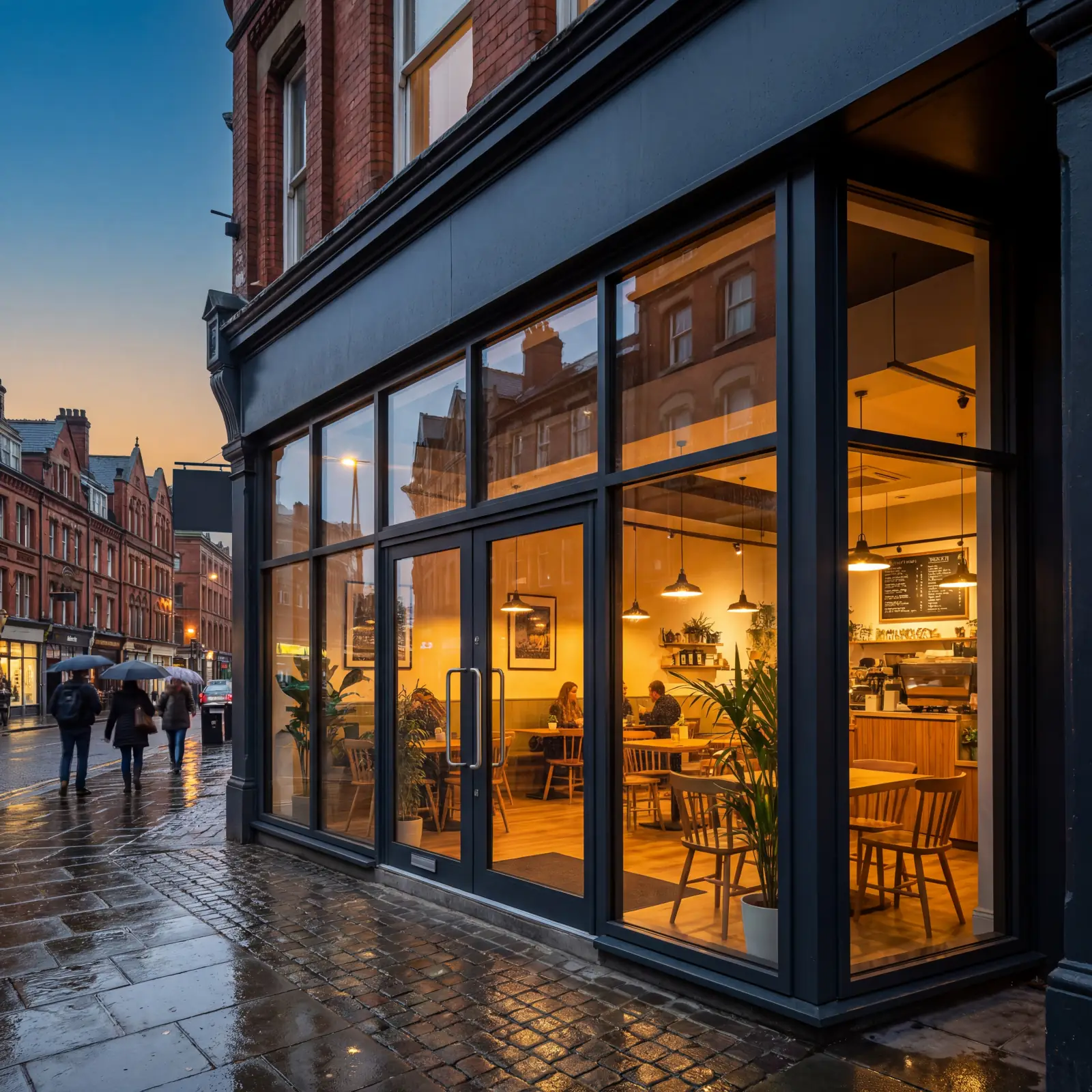
A shopfront is the hardest-working elevation in commercial property. It's your advertising, your security, your thermal envelope and your front door, all at once, on a street where every passer-by judges it in about two seconds. Getting a new one installed, whether you're fitting out a first unit, refreshing a tired frontage or rebuilding after damage, is a perfectly manageable project with a clear sequence to it. We build them, so here's that sequence from the fabrication side of the fence.
Anatomy of a modern shopfront
The standard commercial system is aluminium framing, powder-coated to any RAL colour and engineered for spans domestic frames can't touch, holding toughened or laminated safety glazing. Around that sits an entrance door, framed, frameless glass or automatic, a stall riser at the base to take the knocks, a signage zone above, and increasingly a security layer of laminated glass, shutters or grilles. Thermal performance matters now too. Part L applies to replacements, and heated retail space behind a single-glazed 1980s frontage leaks money exactly the way houses do.
Do you need planning permission?
Frequently, yes, because shopfronts sit outside householder permitted development. A like-for-like replacement in the same materials and configuration often proceeds without an application, but material changes such as the classic timber-to-aluminium switch, reconfigured openings, new shutters or their boxes, and anything in a conservation area or on a listed parade will generally need consent. Manchester and the boroughs publish shopfront design guides, and they're worth reading before you fall in love with a design, since they favour proportionate glazing, quality materials and restrained signage zones. Allow eight weeks for a decision, and remember the signage itself may need separate advertisement consent. A supplier who's worked your borough will flag all of this at survey. It's part of our commercial service for exactly that reason.
Specification decisions that matter
- Glass: toughened is the safety baseline, and laminated adds hold-together security. After one glazing loss, most owners specify it, for reasons our emergency shopfront guide makes vivid. Solar control glass tames south-facing display windows.
- Entrance: manual doors for character, automatic sliders for footfall and accessibility. Equality Act expectations make level thresholds and adequate clear widths effectively mandatory design points.
- Security: laminated glazing plus quality locks handles most risks visibly and insurably. External shutters add certainty but need planning care, while internal grilles give up nothing visually by day.
- Ventilation and heat: opening lights or vents above the glazing line keep small retail units livable without propping the door open.
- The frame colour: it's part of your brand now, matched via RAL across frontage, doors and signage returns.
Costs and timelines
For a typical single-unit Manchester frontage of 4-6 metres, budget £6,000-£12,000 for an aluminium shopfront with toughened glazing and a manual door, supplied and installed. Laminated glass, an automatic entrance or shutters push things to £12,000-£20,000-plus, and conservation-grade or bespoke work sits above that. On timing, allow a week or two for survey and design, around eight weeks for planning if it's needed, two to four weeks for fabrication, and two to five days on site, programmed around your trading wherever possible, including overnight glazing swaps. The classic budget mistakes? Forgetting the signage electrics, ignoring the condition of the stall riser, and only discovering the structural opening needs work when the old frontage comes out. A proper survey de-risks all three.
Choosing the contractor
Shopfronts sit between glazing and shopfitting, and the market holds both specialists and chancers. Filter with the same instincts you'd apply to any glazing purchase. Is fabrication in-house or bought in? Are there installations you can go and stand in front of? Is the firm fluent in compliance, meaning Part L, safety glazing, the Equality Act and planning? Are insurance and guarantees in writing, and is there a credible plan for trading during the works? Because we fabricate commercial systems in Trafford Park and run 24/7 emergency glazing, our shopfront clients get the same firm for the install and for the 2am board-up years later. The night it's needed, that continuity is worth real money.
A frontage refresh short of full replacement
Not every tired shopfront needs rebuilding. If the frame is structurally sound, a staged refresh stretches the budget a long way. Reglazing with laminated and solar-control units modernises performance within the existing grid. Doors, closers and thresholds can be swapped individually. Powder-coated frames can be professionally over-sprayed on site in a new RAL, and signage zones re-clad. A refresh package often lands at a third of replacement cost and transforms the street presence, while an honest survey will just as readily tell you when frame corrosion, failed fixings or single glazing make full replacement the economical route. The logic mirrors domestic repair-versus-replace. Sound bones favour the refresh, structural fatigue favours starting again. Either way, get the security and glass specification right first, because trading behind the wrong glass is the risk that compounds.
Frequently asked questions
How much does a new shopfront cost in Manchester?
A typical 4-6m aluminium frontage with toughened glazing and a manual door runs £6,000-£12,000 installed. Laminated glass, automatic doors or shutters push that to £12,000-£20,000-plus. Structural opening work and signage electrics are the common extras to budget for.
Do I need planning permission for a new shopfront?
Often. Material or configuration changes, shutters, and anything in a conservation area usually need consent, while like-for-like replacement may not. Check your borough's shopfront design guide early and allow eight weeks for a decision. Signage may need separate advertisement consent.
How long does shopfront installation take?
Two to five days on site for a typical unit, after two to four weeks of fabrication. Much of the disruptive work can be programmed overnight or around trading hours, so make trading continuity an explicit requirement when you compare contractors.
What glass is required for shopfronts?
Safety glazing is mandatory at low level. Toughened is the baseline, with laminated where security or insurers demand hold-together performance. Solar control specifications protect south-facing displays and interiors.
Can I keep trading during shopfront replacement?
Usually, with planning. Phased installation, secure temporary screening and overnight glazing swaps keep most units trading right through the works. It takes a little coordination and it's almost always worth it.
Who maintains and repairs shopfronts after installation?
Ideally the firm that built it, since alignment, door closers, gaskets and glass all benefit from the installer's records. Our commercial clients fold shopfronts into planned maintenance and get 24/7 emergency response from the same team.
Planning a frontage?
Design, planning drawings, fabrication in Trafford Park and installation programmed around your trading. One firm, one guarantee, and the same 24/7 number if the glass ever goes through at 3am.
Call 07533 830717, WhatsApp us a photo for a fast quote, or request a free quote online.