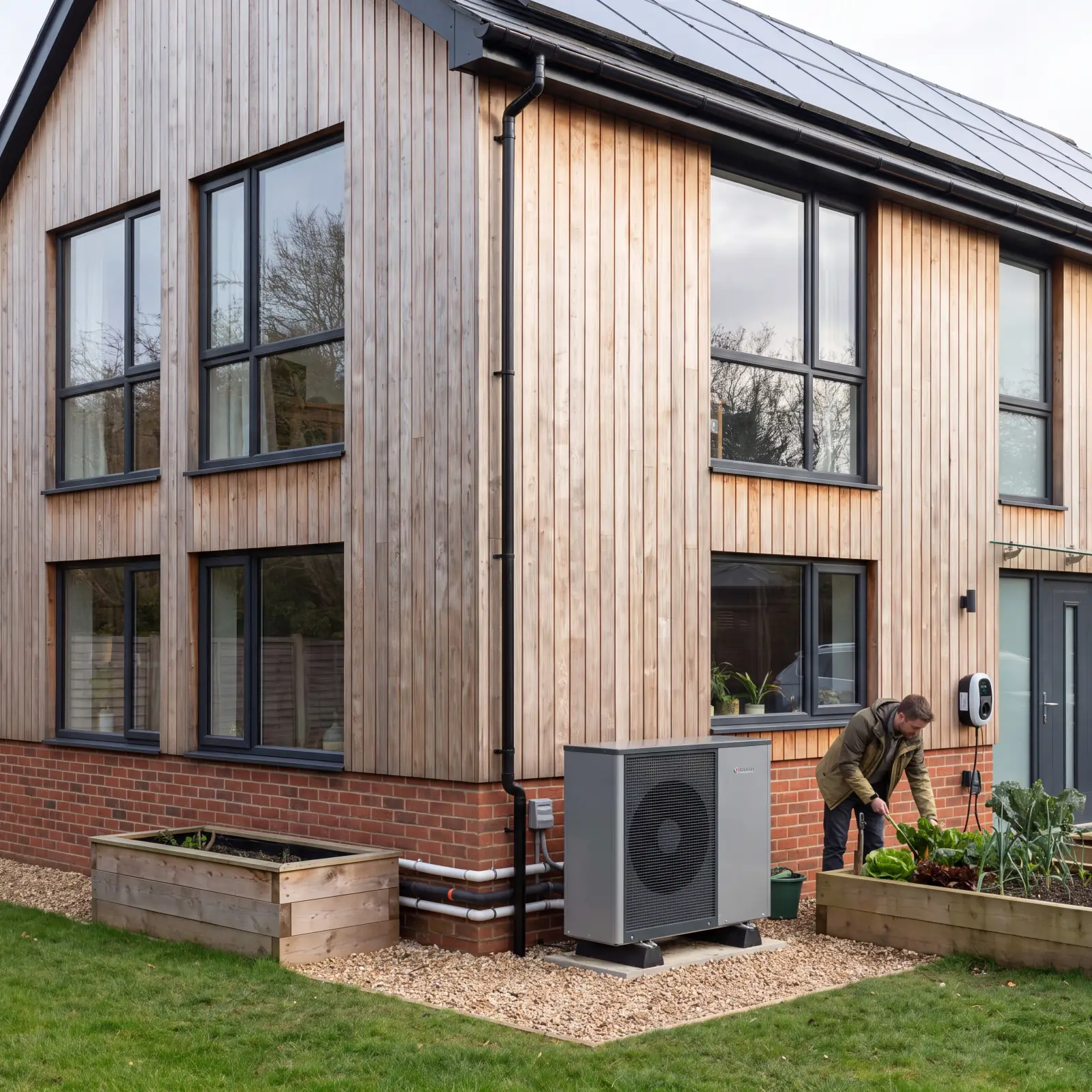
Britain's heat pump rollout has found its stride. Grants of £7,500 through the Boiler Upgrade Scheme, installation numbers climbing year on year, and the Future Homes Standard making heat pumps the default for new builds. But the households happiest with theirs share a secret that has nothing to do with the pump itself. They fixed the fabric first. And in the fabric hierarchy, windows occupy a peculiar, decisive position.
Why heat pumps care about your windows more than boilers did
A gas boiler is a brute-force instrument. It blasts 70°C water into radiators and simply overwhelms whatever heat the house leaks. A heat pump is an efficiency instrument. It runs gently and continuously at 35-50°C, sipping electricity to move heat rather than burning fuel to make it, and its economics depend on the house holding what it's given. Leaky glazing forces a heat pump to work harder at worse efficiency, or forces the installer to specify a bigger, dearer unit with larger radiators to compensate. The same failed windows that cost a boiler-heated home £200 a year can cost a heat-pump home that sum plus an oversized system plus a permanently blunted efficiency coefficient. Fabric first isn't ideology. It's arithmetic.
What 'fabric first' means in practice
- Cheapest heat saved first: loft insulation top-ups and draught-proofing lead the queue, at pennies per kWh saved.
- Windows next, where they're failing: misted, draughty or pre-2002 glazing is a live leak. Replacing it cuts heat demand meaningfully and, uniquely on this list, also fixes noise, condensation and security in the same spend.
- Walls and floors as budgets allow: bigger jobs with bigger disruption, best done when the house is being worked on anyway.
- Then the heat pump, sized against the improved house. Smaller, cheaper, and running in its efficiency sweet spot.
The sizing dividend nobody mentions
Heat pump installers size systems from a room-by-room heat-loss calculation, and glazing feeds directly into it. Upgrade from failed 1990s units at U ≈ 3.0 to modern A++ at ≈1.1 across a typical semi before the survey happens, and the calculated heat loss can drop enough to move you down a unit size and shrink several radiators. Those savings routinely offset a chunk of the window spend at a stroke, before you've counted a single month's running costs. Do the windows after the heat pump instead, and you've paid for capacity you'll never use. Order of operations is the whole game here, which is why the worked savings numbers matter more in this decision than anywhere else.
Comfort: the low-temperature difference you can feel
There's a sensory reason heat-pump homes notice their glazing. Gentle 40°C radiators don't create the roaring convection that masks a cold window. Sit near old glazing in a heat-pump house and the cold radiant patch is unmistakable. Modern Low-E glass, with its warmer inner pane, closes exactly that gap. Put the two together, steady low-temperature heat plus high-performance glazing, and you get the specific comfort people describe as the house just feeling even everywhere. Neither half delivers it alone.
Sequencing a real 2026 retrofit
Retrofits like this come through our diary constantly across Greater Manchester, and the pattern that works looks like this. Insulate the loft and seal the draughts this month, which is DIY-cheap. Replace the failing glazing next: a 2-3 week lead time, one or two days on site, done before the heating survey. Then commission the heat-loss calculation on the improved house, and install the right-sized heat pump with the £7,500 grant. Windows should be specified for the job: A++ as the floor, triple on hard-weather elevations, trickle vents aligned with the ventilation plan, and installation sealing treated as part of the airtightness effort. It's the same fabric-first logic the new-build rules encode, applied voluntarily, in the order that saves the most money.
One caution before you sign anything. Beware bundled 'whole-house energy packages' that sequence the work for the seller's convenience rather than yours, fitting the headline heat pump first and returning for the fabric later at leisure. The physics doesn't care whose van arrives first, but your wallet does, because capacity bought against a leaky house is bought forever. Insist on the fabric-first order, get the glazing surveyed independently of the heating sale, and let each trade do what it's genuinely best at. A retrofit that works is a sequence of good decisions, not a single glossy contract.
Frequently asked questions
Should I replace windows before getting a heat pump?
If they're failing or pre-2002, yes. The heat-loss calculation that sizes your heat pump rewards the upgrade with a smaller, cheaper system and better running efficiency. Sound modern glazing can wait. Failed glazing before the survey is the money-saving order.
Will a heat pump work with old windows?
It'll work, because installers compensate with bigger units and radiators. It'll just work expensively: worse efficiency, higher running costs, and capacity you paid for that mostly heats the street. Fabric first is how heat pumps hit their advertised economics.
Do windows affect heat pump sizing?
Directly. Glazing U-values feed the room-by-room heat-loss calculation that determines unit and radiator sizing, so upgrading failed glazing before the survey can genuinely move you down a size band.
Is triple glazing necessary for a heat pump home?
Not necessary, but unusually well matched. Low-temperature heating repays reduced losses disproportionately, and the radiant comfort near triple-glazed windows suits the steady heat-pump style. A++ double remains a sound floor; triple earns its keep on exposed elevations.
Can I get a grant for windows alongside the heat pump grant?
The £7,500 Boiler Upgrade Scheme covers the heat pump, not glazing, and window support is rare outside targeted low-income schemes. Budget windows at real prices, where factory-direct buying is the reliable saving, and let the sizing dividend offset part of the cost.
What order should a whole-house retrofit go in?
Loft insulation and draught-proofing, then failing windows, then wall measures as budget allows, then the heat-loss survey and a right-sized heat pump. Each step makes the next one cheaper. Sequence is the biggest free saving in retrofit.
Getting heat-pump ready?
We'll survey your glazing against the retrofit plan, replace what's leaking, specify for low-temperature comfort, and time the work before your heat-loss calculation so the pump gets sized for the better house. Made in Manchester, 10-year guarantee.
Call 07533 830717, WhatsApp us a photo for a fast quote, or request a free quote online.