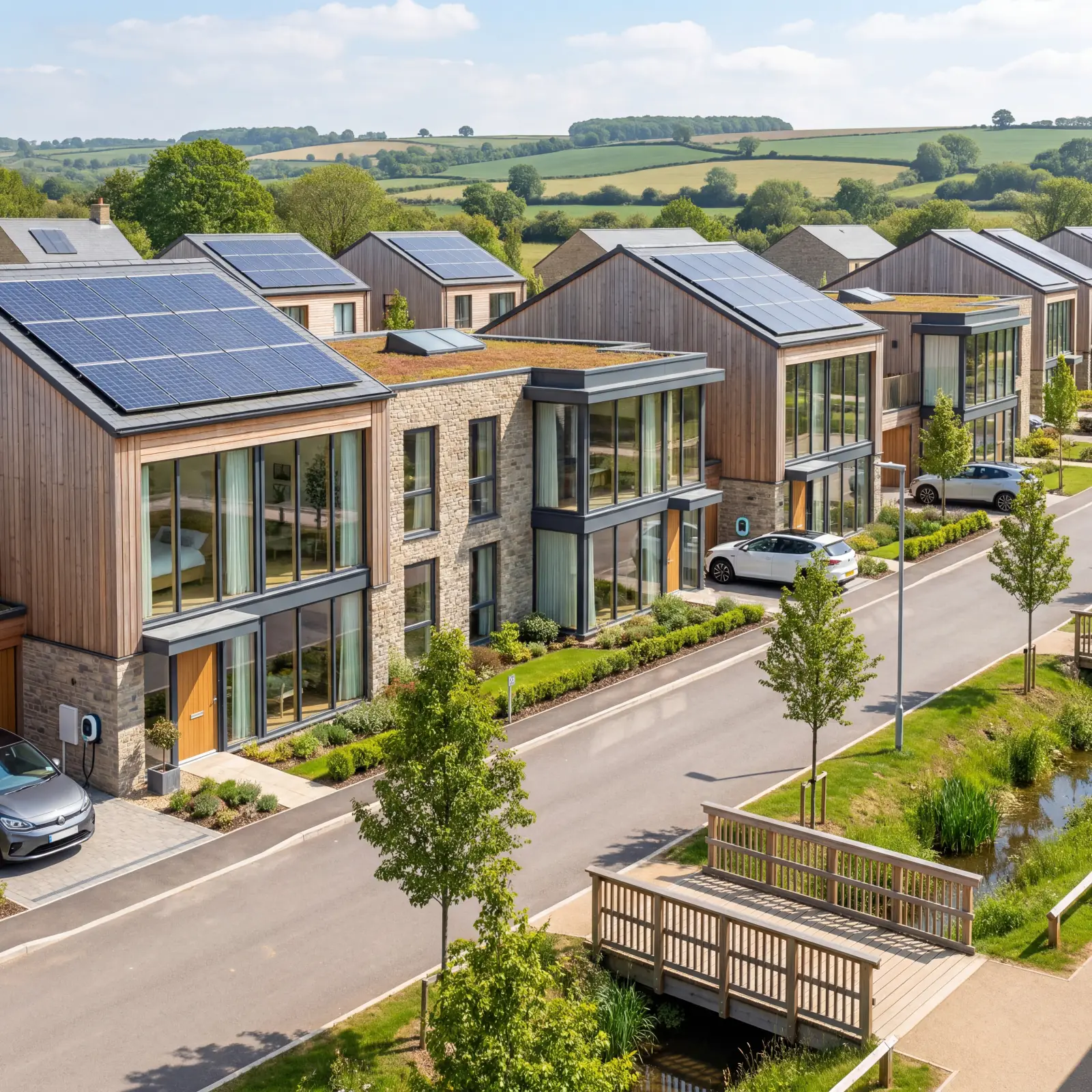
Every decade or so, building regulations take a step big enough to reshape an entire industry. For 2026, that step is the Future Homes Standard, the framework requiring new homes to produce far lower carbon emissions than those built under the old rules, somewhere in the region of 75-80% less. It's built around heat pumps, airtight fabric and, inevitably, much better glazing. Buying a new-build? Planning an extension? Wondering why the whole window trade has suddenly started talking about triple glazing? This is the story behind all three.
What the Future Homes Standard actually is
The FHS succeeds the 2021/2022 uplift of Part L, the energy-efficiency section of building regulations for new homes in England. Its logic is straightforward. Homes built now will still be standing in 2100, so they need to be built ready for a zero-carbon grid. That means no fossil-fuel boilers, very low heat demand, and a fabric standard good enough for a heat pump to run the home efficiently. For glazing, it translates into notional designs built around significantly lower window U-values than the old norms, with triple glazing or very high-performance double glazing as the expected route to compliance on new builds.
What it demands from windows
- Lower U-values. The notional new-build specification points at whole-window values around 0.8-1.2 W/m²K, which is triple glazing territory or the very best double glazing, against the 1.4 ceiling that still governs replacement windows in existing homes.
- Airtightness. Tighter permitted leakage means window installation quality, the taping, sealing and junction detailing, becomes a compliance matter rather than just good practice.
- Ventilation by design. Airtight homes need engineered ventilation, so trickle vents, MVHR interfaces and secure night-vent positions get specified, not improvised on site.
- Solar gain management. Alongside Part O's overheating rules, glazing has to balance winter gain against summer comfort, so g-values join U-values on the drawing.
Does it affect your existing home?
Directly, no. The FHS governs new dwellings, and replacement windows in existing homes carry on under the existing Part L rules of 1.4 W/m²K or better, or WER band B+. Indirectly, quite a lot. Standards for new homes have a long history of migrating into replacement requirements a cycle later. Manufacturers are re-tooling towards triple glazing at volume, which pushes its price down for everyone. And buyers are learning to read U-values off the back of new-build marketing. The window you'd be wise to fit in 2026, A++ double or targeted triple, is partly a bet on where those standards are visibly heading.
Who feels it first
- Self-builders and developers: immediately. Glazing packages on new dwellings have to meet the new notional specs, and SAP calculations will police them.
- Extension builders: extensions follow existing-dwelling rules, but glazing-heavy extensions already draw tighter scrutiny, and specifying to the new-build standard future-proofs the work.
- Landlords and sellers: as new stock raises the efficiency bar, the glazing gaps in older homes show up more starkly in EPCs and valuations.
- Everyone buying windows: the market's centre of gravity is shifting, and cheap low-spec frames are becoming the visibly obsolete choice.
The sensible response, without panic
Nobody needs to rip out sound windows because a new-build standard changed. The rational moves are simpler than that. When you're replacing anyway, specify to the direction of travel: A++ as a minimum, triple where an elevation earns it, and quality installation with proper sealing. When extending, treat the new-build spec as the default rather than the upgrade. And when comparing suppliers, ask who can already deliver FHS-grade specifications. Some fabricators re-tooled for it, our Trafford Park factory included, while others are still selling 2015 specifications at 2026 prices. Standards move slowly and then suddenly. This is the sudden part, and it rewards buyers who read it early.
The bigger picture: why this standard exists
Homes account for a large slice of UK carbon emissions, most of it heating, and the housing built this decade will outlive every net-zero deadline on the statute book. Regulators concluded, reasonably enough, that it's far cheaper to build homes right than to retrofit them later. The country is currently learning that lesson expensively with its Victorian stock. For the window industry, the FHS feels less like a burden than a graduation. Glazing moves from being the envelope's tolerated weak point to a precision component with specified U-values, g-values and airtightness contributions. Fabricators who invested in that future are ready for it; the standard mostly exposes the ones who didn't. For buyers, the takeaway is a happy one. The gap between compliant glazing and excellent glazing is narrowing from both ends, and buying quality has never lined up better with buying the rules.
Frequently asked questions
What is the Future Homes Standard in simple terms?
It's the building-regulations framework for new homes in England requiring dramatically lower carbon emissions, roughly 75-80% below the old standard, achieved through heat pumps, airtight construction and high-performance fabric, much better glazing included.
Does the Future Homes Standard require triple glazing?
It doesn't name products. It sets performance levels that, in practice, point at triple glazing or the very best double glazing for new builds. Compliance is calculated whole-house, so exceptional fabric elsewhere buys some flexibility on the glazing.
Do FHS rules apply to replacement windows?
No. Replacements in existing homes stay under existing Part L, meaning 1.4 W/m²K or better. But new-build standards have historically migrated into replacement rules over time, which is a decent argument for specifying above the minimum now.
Will the Future Homes Standard make windows more expensive?
Higher specifications cost more per window, but volume manufacturing of triple glazing is already compressing the premium. Expect the gap between standard and high-spec glazing to narrow over the next few years rather than widen.
I'm building an extension - which rules apply?
Extensions follow the rules for work on existing dwellings, not the full FHS. Even so, specifying extension glazing to the new-build standard is cheap future-proofing, and heavily glazed extensions already face solar-gain and efficiency scrutiny.
How should the FHS change what I buy in 2026?
Buy the direction of travel: A++ as the floor, triple glazing where exposure or comfort justify it, and installation quality treated as part of the specification. Ask suppliers directly whether they can deliver FHS-grade specs. The answer sorts the market quickly.
Specify for where the rules are going
High-performance double, triple, and the installation detailing that makes airtightness real, all fabricated in Trafford Park for new builds, extensions and replacements across the North West. FHS-grade specs, 10-year guarantee.
Call 07533 830717, WhatsApp us a photo for a fast quote, or request a free quote online.