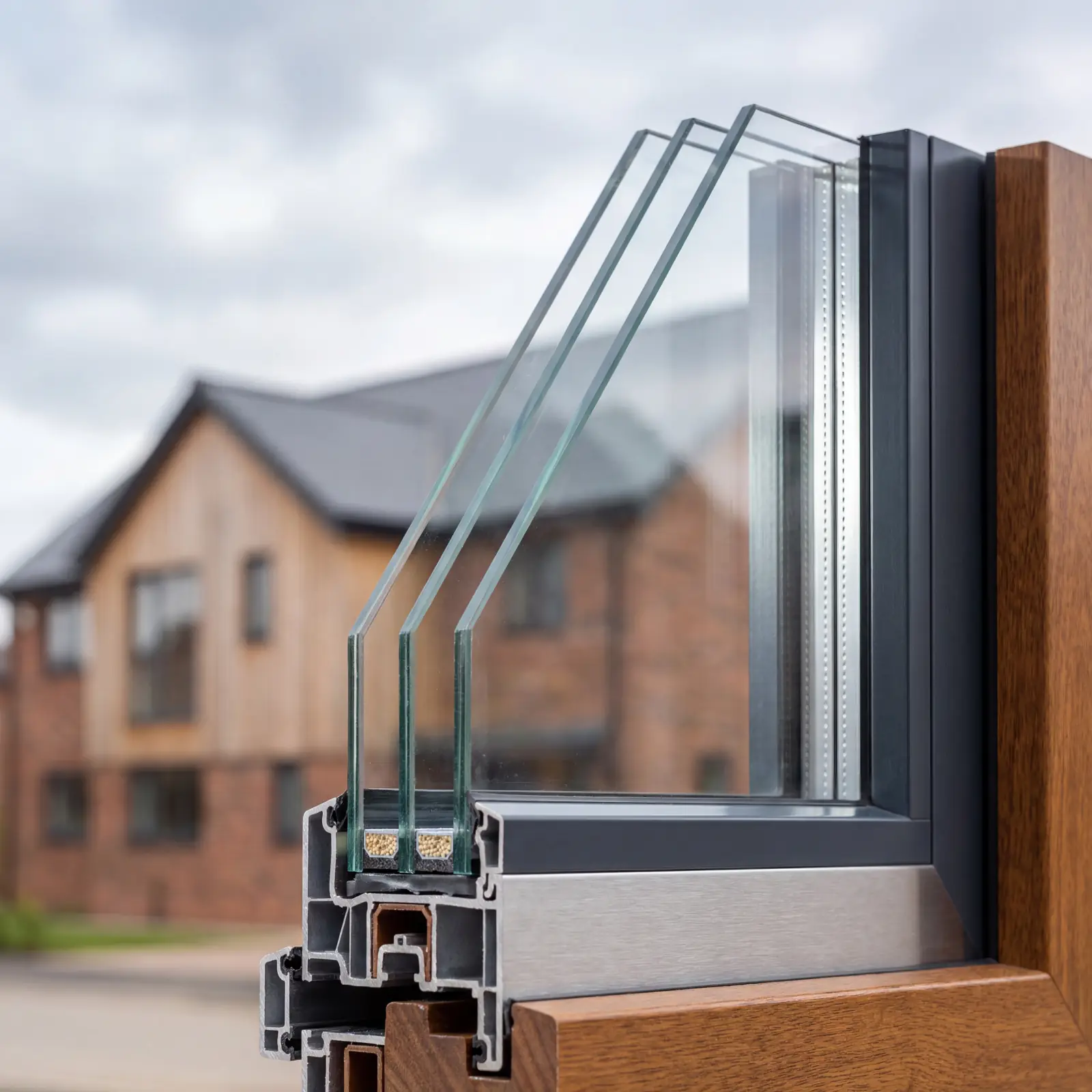
It's the question landing in every window company's inbox this year, ours included: is triple glazing about to become law? No product is being mandated. But performance standards are tightening to levels that triple glazing satisfies most easily, first for new builds and, if the historical pattern holds, eventually for the rest of us. Let's untangle the regulatory picture, and work out what it should and shouldn't change about your next window decision.
What the rules actually say
UK building regulations regulate outcomes rather than products: U-values, carbon targets, airtightness. Under the Future Homes Standard, new homes must hit whole-dwelling carbon and fabric targets whose notional glazing specification sits around 0.8-1.2 W/m²K. Quality triple glazing meets those numbers comfortably. The very best double glazing meets them narrowly. Ordinary double glazing doesn't. So on new builds, triple glazing is becoming the practical default without ever being named in law. For replacement windows in existing homes, the current requirement remains 1.4 W/m²K or WER band B+, squarely double-glazing territory, and unchanged for now.
The pattern worth knowing: minimums migrate
Why watch new-build rules if you'll never buy a new build? Because replacement standards have always followed them at a distance. Double glazing itself went from premium to universal to legally required along exactly this path, new-build codes first, replacement rules a cycle later, until by 2002 fitting single glazing became non-compliant. If the pattern repeats, today's 1.4 replacement ceiling tightens towards 1.2 and below over the coming cycles, and windows bought at the bare minimum now will be below-standard windows sooner than their 30-year lifespan expects. Nobody can promise the timetable, and we won't pretend to. The direction, though, has never once reversed in the thirty-odd years we've been watching it.
Meanwhile, the market is moving faster than the law
- Volume manufacturing for new-build demand is pushing triple glazing's premium down, from 30-40% over double a few years ago towards 15-25% now
- Buyers increasingly read U-values, and estate agents have learned to write 'triple glazed' in listings the way they once wrote 'double glazed'
- Heat pump owners discover the fabric-first logic personally, since lower-temperature heating rewards better glazing disproportionately
- Scotland and much of northern Europe already treat triple as standard. The UK is converging, not experimenting
So what should you actually fit in 2026?
Our advice hasn't changed since the original triple glazing guide, though the context around it has. A++ double glazing at U 1.1-1.2 remains the value answer for most Manchester replacements, comfortably above today's legal floor and respectable against tomorrow's likely one. Triple glazing earns its premium on exposed and north-facing elevations, in noise-affected bedrooms, in heat-pump homes, and for anyone planning to hold the house fifteen years or more who'd rather buy the coming standard once than the passing one twice. What has genuinely changed is the framing. Triple is no longer the exotic upgrade it was five years ago. It's become the early-majority choice, jobs specifying it come through the factory every week now, and pricing increasingly reflects that.
Questions to put to any supplier this year
Ask for whole-window U-values on your sizes in both double and triple, priced side by side. The gap is often smaller than people expect. Ask whether their triple units use appropriate cavities and coatings, or are just three panes of marketing. And ask what the frames were designed for, because profiles engineered for triple glazing carry the weight without sagging, while older systems retrofitted with heavy units are how hinges fail early. We fabricate both specifications in Trafford Park and we'll happily show you the per-elevation comparison, including the elevations where we'd tell you to keep the double.
A short history lesson, because it settles the argument
In 1990, double glazing was a premium product with a payback debate attached. By 2002 it was compulsory in replacements, and by 2010 a single-glazed listing was a renovation project by definition. People who bought quality double glazing early enjoyed two decades of comfort and never once regretted being ahead of the rule. People who bought the last cheap single-glazed windows in 2001 owned instantly outdated products. Triple glazing in 2026 sits precisely where double glazing sat in the mid-90s: past the early-adopter tax, ahead of the mandate, priced on a falling curve. You don't have to fit it everywhere. But betting against it on a 30-year product means betting against every precedent this industry has.
Frequently asked questions
Is triple glazing mandatory in the UK in 2026?
No product is mandated. New-build performance standards under the Future Homes Standard effectively require triple-glazing-level U-values, which makes it the practical new-build default. Replacement windows in existing homes still require 1.4 W/m²K or better, which is double-glazing territory.
Will replacement windows have to be triple glazed eventually?
No date exists, but the historical pattern of new-build standards migrating into replacement rules a cycle later, exactly as happened with double glazing, points that way. Specifying above today's minimum is sensible insurance on a 30-year purchase.
How much more does triple glazing cost in 2026?
Typically 15-25% over equivalent double glazing and narrowing, as new-build volume drives manufacturing scale. Get both priced on your actual sizes, because the per-window gap is often smaller than the headline percentage suggests.
Is triple glazing worth it if I have a heat pump?
More than for most homes. Heat pumps run at lower temperatures and repay reduced heat loss with smaller units, cheaper running and better comfort. Fabric-first logic makes glazing and heat pumps natural partners.
Does triple glazing need special frames?
It needs frames engineered for the weight and unit depth. Quality modern systems are. Older or budget profiles retrofitted with heavy units develop hinge and alignment problems, so ask explicitly whether the frame system was designed for triple.
Should I wait for the rules to settle before buying?
Not if your windows are failing. Waiting costs a heating season, and double glazing prices aren't falling. Buy A++ double or targeted triple now and you're above every plausible near-term standard either way.
Double and triple, priced side by side
Send us your sizes and we'll quote both specifications per elevation from our Manchester factory, with whole-window U-values in writing, frames engineered for the weight, and a 10-year guarantee on whichever the house actually needs.
Call 07533 830717, WhatsApp us a photo for a fast quote, or request a free quote online.