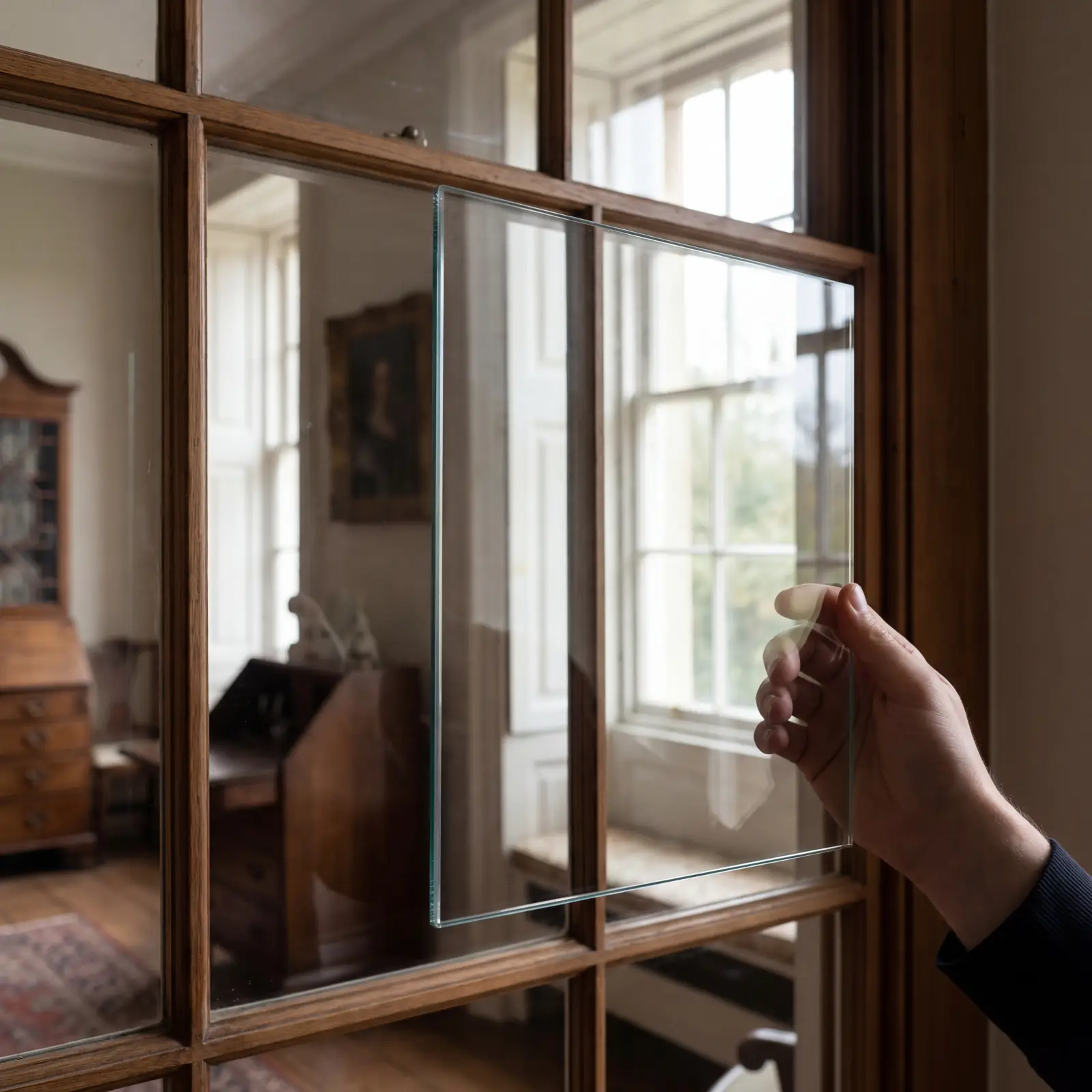
Every so often a glazing technology arrives that changes what's physically possible. Vacuum insulated glazing, VIG, is this decade's. Two panes of glass separated not by 16-20mm of argon but by a fraction of a millimetre of literal vacuum, delivering triple-glazing thermal performance in a unit as slim as 6-8mm. For most homes it's an interesting alternative. For heritage homes, where every solution until now forced a choice between original frames and modern warmth, it's close to the answer the sector has been waiting thirty years for.
How it works
Heat crosses a normal double-glazed cavity by conduction and convection through the gas, and the whole art of conventional units is slowing that crossing. Vacuum glazing removes the medium entirely. No gas, no conduction, no convection. It's the same principle as a thermos flask. A grid of near-invisible micro-pillars, fractions of a millimetre wide and spaced a few centimetres apart, stops the panes touching under atmospheric pressure. A Low-E coating handles radiation, and the edge is hermetically sealed. The result is centre-pane U-values around 0.4-0.7 W/m²K, better than most triple glazing, from a unit thinner than the single glass in a Victorian sash.
Why heritage homes are the killer application
The eternal heritage problem goes like this. Original sashes and casements have rebates cut for 3-4mm glass, and conventional double glazing at 24-28mm simply doesn't fit without destroying or replacing the joinery. That compromise sits at the heart of every restore-or-replace decision we're asked about. Slim double-glazed units at 10-12mm eased it. Vacuum glazing at 6-8mm largely dissolves it. Original Georgian and Victorian joinery can be routed minimally and reglazed with VIG, keeping the frames, the sightlines and the wavy-glass character of the street, while transforming thermal performance beyond what even replacement windows achieve. Conservation officers, historically the immovable object in these conversations, increasingly approve VIG retrofits for precisely this reason. Nothing visible changes.
The honest limitations
- Price: several times conventional units, typically £350-£700+ per m² for the glass alone, plus specialist fitting into original joinery. It's falling as production scales, but it's still a premium product.
- The pillars and the port: viewed close up against bright light, the micro-pillar grid and the small evacuation port are just perceptible. At room distance, invisible. Purists should view a sample first.
- Sizes and shapes: manufacturing limits apply to very large panes and curves, though ordinary sash and casement sizes sit comfortably within range.
- Toughness and repair: units are robust, but a failure means unit replacement, as with any sealed unit, and supply chains, while growing, are younger than conventional glass.
- Acoustics: good but not magic. The vacuum blocks some transmission paths; for serious noise, laminated acoustic specs still lead.
Where it fits in the 2026 decision tree
Listed buildings and conservation-area homes with sound original joinery? VIG into the originals is now frequently the best answer full stop, performance without the planning fight. Period homes with tired frames? Heritage-style replacement windows remain better value, with VIG as the glass option where sightlines demand ultimate slimness. Ordinary homes? Conventional A++ double or triple delivers similar performance for far less. VIG's premium buys thinness, and if you don't need thinness, don't pay for it. It's a specialist tool, arriving exactly where the Future Homes era squeezes hardest: the old stock that standard solutions never fitted.
Buying it well
Ask for the certified centre-pane and whole-window U-values. Ask for the warranty on the vacuum seal, which should be 10+ years from credible manufacturers. Ask for a physical sample so you can judge the pillars and port placement yourself. And, critically, insist on a fitter experienced with both VIG handling and heritage joinery, because the glass is only half the craft. As local fabricators we watch this space with a commercial eye. We fit slim and vacuum specifications where the project justifies them, source from certified manufacturers, and we'll say so straight when a conventional unit does the job for a third of the money. Breakthroughs deserve enthusiasm and a calculator in equal measure.
Step back and vacuum glazing marks something bigger: the end of the era when heritage and performance were opposites. For a century, owners of period homes chose between the street's character and their heating bill, while conservation officers and freezing residents fought a war with no winners. A technology that puts near-passive-house glass inside 1850s joinery retires that conflict. And Greater Manchester, with its miles of Victorian and Edwardian stock, has more to gain from it than almost anywhere in Britain. The wavy old glass in the parlour window can finally keep its house warm.
Frequently asked questions
What is vacuum glazing?
A sealed unit with a vacuum rather than gas between two panes, held apart by near-invisible micro-pillars. With no medium to conduct or convect heat, it achieves U-values of 0.4-0.7, beating most triple glazing, in a unit as thin as 6-8mm.
How much does vacuum glazing cost?
Typically £350-£700+ per square metre for the units, several times conventional glazing, plus specialist fitting, with prices easing as manufacturing scales. The premium buys extreme thinness, so pay it only where thinness matters.
Can vacuum glazing go into original sash windows?
That's its defining use. At 6-8mm it fits, with minimal routing, into joinery cut for single glass, keeping original frames and sightlines while transforming performance. It's increasingly the approved solution for listed and conservation properties.
Is vacuum glazing better than triple glazing?
Thermally it matches or beats it in a far thinner, lighter unit. Triple remains cheaper and better proven at volume. Vacuum wins where depth and weight are constrained, heritage frames above all.
Can you see the pillars in vacuum glazing?
Up close against bright light, the tiny pillar grid and evacuation port are just perceptible. From normal room distance they disappear. View a physical sample before committing; most people stop noticing within a day.
How long does vacuum glazing last?
Credible manufacturers warrant the vacuum seal for 10-15 years with design lives well beyond that. The failure mode is seal loss, as with any sealed unit, fixed by unit replacement. Buy certified product with a written seal warranty.
Heritage frames, modern physics
From slim units to vacuum glazing fitted into original joinery, and heritage-style replacements where the frames really are done. Surveyed straight, sourced from certified manufacturers, fitted by people who respect old windows. Free survey across Greater Manchester.
Call 07533 830717, WhatsApp us a photo for a fast quote, or request a free quote online.