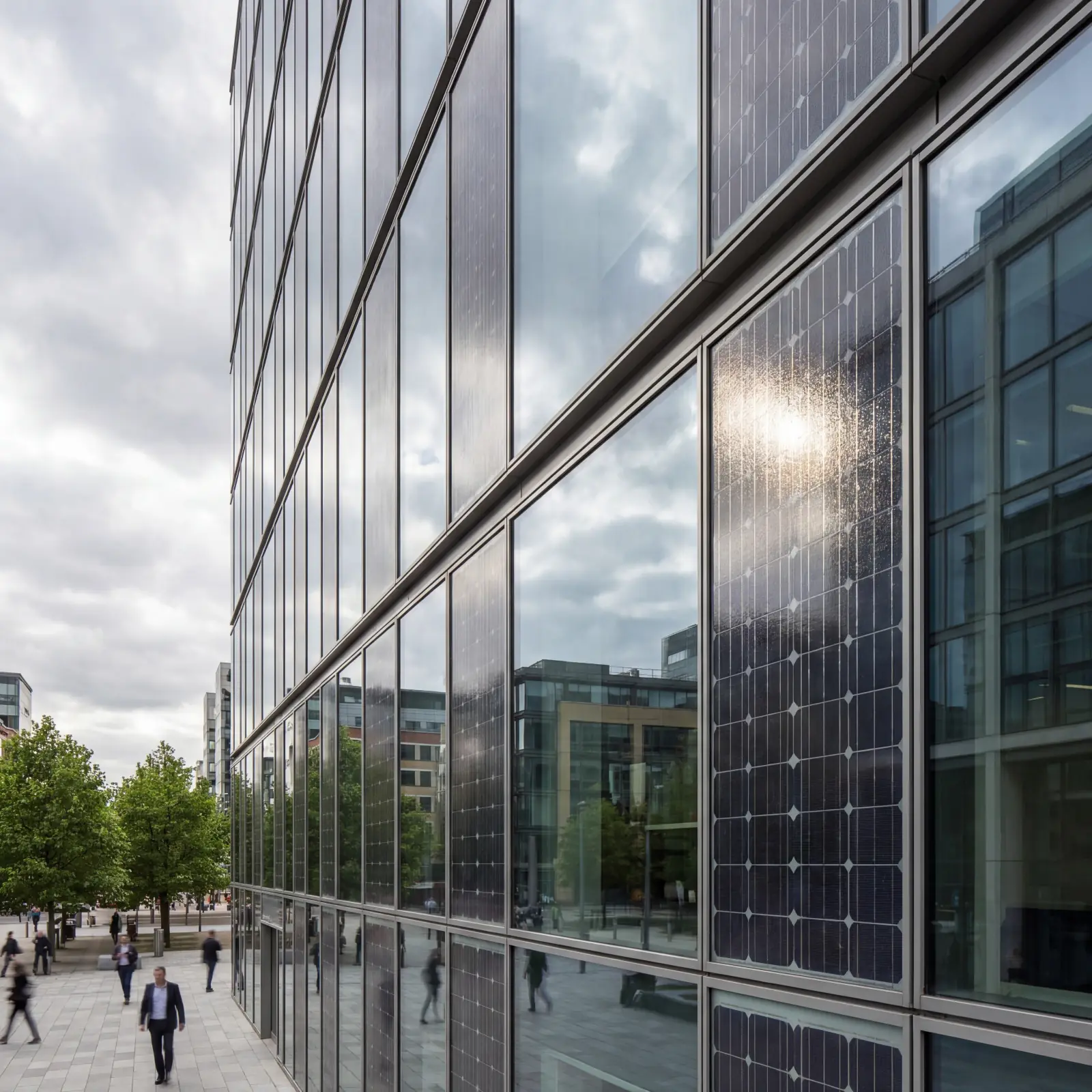
The most seductive idea in glazing is finally growing up: glass that doesn't just let energy in, but harvests it. Building-integrated photovoltaics, BIPV for short, turn a building's skin into its power plant. The transparent and semi-transparent versions now arriving promise windows, facades and roof glazing that quietly generate electricity while doing their day job. And as with every technology this attractive, the 2026 reality mixes genuinely deployable products with some very confident brochures. Let's separate the two.
The technology family, sorted by readiness
- Opaque BIPV panels with solar cells built into spandrels, cladding and roof elements. Mature and commercially routine. The building generates without the glazing being transparent at all.
- Semi-transparent PV glass, either crystalline cells spaced within laminated glass (giving a striped shading effect) or thin-film coatings that pass some light. Deployable now for canopies, atria, curtain walling and conservatory-style roofs. Think 10-40% light transmission and meaningful, if modest, output.
- Truly transparent solar windows, with coatings that harvest UV and infrared while passing visible light. Real in labs and pilot buildings, but efficiencies remain in low single digits. This is the one to watch, not yet the one to buy for a house.
The honest numbers
A conventional rooftop solar panel converts around 20-22% of sunlight. Semi-transparent PV glass typically manages 5-12% depending on transparency, because every photon you can see is one that wasn't harvested, and a vertical window faces the sun poorly compared to a pitched roof. Run the maths on a south-facing semi-transparent window and you get useful trickle generation, perhaps 30-80 kWh per square metre per year, against 150-200+ for the same area of roof panel. For homeowners the conclusion is blunt. If you have roof space, ordinary solar panels beat solar windows on every economic measure, and the right glazing spend remains efficiency. BIPV's real 2026 market is buildings with lots of facade and little roof, which is exactly why the technology is arriving through commercial glazing first.
Where BIPV genuinely earns its place now
- Commercial facades and curtain walling, where big vertical glass areas meet corporate net-zero targets, and spandrel zones can take opaque high-efficiency panels
- Canopies, carports, walkways and atrium roofs, where near-horizontal glass with structural PV laminate shades and generates at the same time
- Glazed commercial roofs and conservatory-style spaces where the striped-cell look works with the design rather than against it
- New-build projects chasing on-site generation targets, where every surface counts towards the calculation
For homeowners: the sensible 2026 posture
Spend the glazing budget on performance, meaning A++ or triple, with solar control where the sun demands it. Spend the generation budget on the roof. And keep the frames upgrade-ready, because sealed units are replaceable components, so a quality frame bought today can accept the transparent PV units of the 2030s if they mature as hoped. It's the same future-proofing logic that applies to every emerging glass technology. The mistake to avoid is paying pioneer prices for low-yield novelty on a family home. The opportunity worth seizing is asking about BIPV early on any commercial or heavily glazed project, where it already stacks up.
Questions that expose the hype
If someone offers you solar glazing, four questions cut straight to reality. What's the rated output per square metre in this orientation, in watts-peak and expected annual kWh? What's the visible light transmission? What happens when a unit fails, is it a standard replaceable component with an inverter path or a bespoke system with one supplier? And what would the same money generate spent on roof PV instead? Genuine BIPV suppliers answer with datasheets. The rest change the subject to the future. The future is coming, no argument from us, but you should only pay today's prices for today's watts.
The five-year outlook
Where does this plausibly go? Perovskite and organic PV chemistries keep pushing transparent-cell efficiencies upward. Costs fall the way all photovoltaics have fallen for two decades. And the Future Homes era's appetite for on-site generation pulls BIPV from commercial into premium residential, probably arriving first as generating conservatory roofs, canopies and gable glazing rather than living-room windows. When quality semi-transparent units reach conventional-glazing price multiples of two rather than five, the calculation flips for south-facing domestic glass, and because sealed units are swappable, the upgrade path runs through frames bought today. So our advice ages gracefully. Build with good bones, harvest with the roof, and revisit the window question around 2030. We'll be watching the datasheets so you don't have to.
Frequently asked questions
Can windows really generate electricity?
Yes. Semi-transparent photovoltaic glass exists and works, typically converting 5-12% of sunlight while passing some light through. Fully transparent solar windows remain low-efficiency and early-stage. The output is real but modest compared with roof panels.
How much does solar glass cost?
Semi-transparent PV glazing typically runs several times the price of quality conventional glazing, commonly £600-£1,200+ per m² installed depending on the system. That's why its economics currently favour large commercial facades over homes.
Are solar windows worth it for a house?
In 2026, rarely. A south-facing roof panel out-generates the same area of vertical solar window several times over at a fraction of the cost, so homeowners get better returns from efficient glazing plus roof PV. Facade-rich, roof-poor buildings are where BIPV pays.
What is BIPV in simple terms?
Building-integrated photovoltaics: solar generation built into the building's own materials, its glass, cladding and roofing, rather than bolted on top. The building's skin becomes part of its power supply.
Can solar glass go into normal window frames?
Semi-transparent PV units can be fabricated into conventional framing systems with cabling routes to an inverter, which is practical in curtain walling and canopies today. For homes, the wiring and the economics usually argue for waiting a product generation.
Will transparent solar windows improve?
Efficiencies are climbing steadily in labs and pilot deployments, and because the sealed-unit format is swappable, today's quality frames could accept tomorrow's PV glass as a retrofit. A watching brief for homeowners; a live option for anyone specifying big glass.
Big glass project? Ask the BIPV question early
We fabricate curtain walling, canopies and commercial glazing where solar glass already makes sense, and we'll tell homeowners straight when roof panels beat it. Datasheet answers, not brochure ones, from the Trafford Park factory.
Call 07533 830717, WhatsApp us a photo for a fast quote, or request a free quote online.