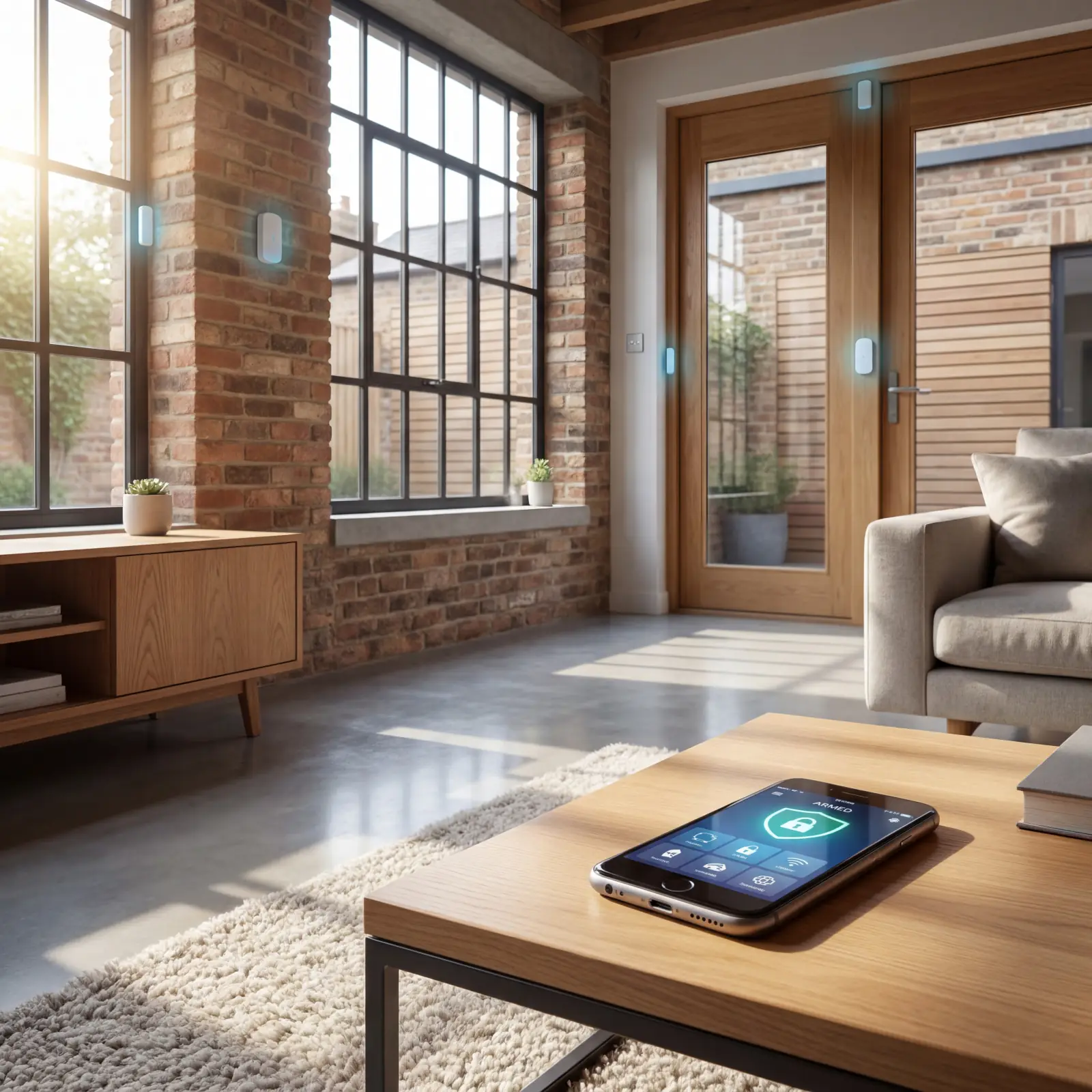
The smart home stopped being a hobby somewhere around 2024. Voice assistants sit in most living rooms now, video doorbells watch perfectly ordinary streets, and AI has quietly shifted from party trick to household infrastructure. Windows and doors, the physical boundary every smart home ultimately protects, joined the network later than the light bulbs did. But 2026 is the year the useful versions finally arrived. So what's genuinely worth having in connected glazing? What's coming next? And what's still just a trade-show demo?
The quietly mature layer: sensors and locks
- Contact and vibration sensors , discreet, frame-integrated or retrofit, they tell your alarm and your phone whether every opening is shut and whether the glass just took an impact. Mature, cheap, and the single highest-value smart addition to glazing.
- Smart lock status , multipoint door locks with a sensed state show 'locked/unlocked' on your phone and alert you when the door sits open, while smart cylinders and handles add app or code entry to composite doors. That nagging 'did I lock up?' feeling, solved.
- Integration , all of it talks to the mainstream ecosystems (HomeKit, Alexa, Google, with the Matter standard tidying up the babel), so window state can trigger heating, alarms and routines. Heating pauses when a window opens; lights simulate presence when the house knows it's empty.
The arriving layer: glazing that acts
Motorised openers bring rooflights and high windows into your ventilation strategy. They open on humidity, CO₂ or temperature triggers and close when the forecast says rain, which turns the overheating night-purge into an automation rather than a chore. Switchable smart glass joins in for privacy on demand. And AI is the new ingredient stitching the lot together: systems that learn your occupancy patterns, pre-ventilate before the shower steam arrives, flag 'window left open and rain coming', and work out it's the cat rather than an intruder before waking you. Here's the thing, though. None of this needs exotic windows. It needs ordinary excellent windows with the right hardware provisions.
What AI actually changes about security
The classic alarm shouted after the glass broke. The 2026 stack tries to stop the break happening at all. Video doorbells and cameras with on-device AI can now spot loitering and testing behaviour, then light up or announce themselves before an attempt is made; vibration analytics can tell a football from a pry bar; and insurers increasingly price for monitored, sensed openings. But the honest hierarchy hasn't moved an inch. Software deters and reports; hardware resists. A PAS 24 window with laminated glass defeats the attack the camera merely films, so the budget order stays the same: physical security first, intelligence layered on top. The best smart security in 2026 is a strong window that also happens to text you.
Buying smart-ready, not gimmick-loaded
- Ask for sensor provision at order time, frame-integrated contacts beat stick-on retrofits for reliability and looks, and they cost very little during fabrication
- Pick door hardware with a sensed-state option even if you won't connect it yet; the cylinder can gain intelligence later, the slab can't
- Favour open standards (Matter-compatible ecosystems) over any window brand's own app, apps die, standards persist
- Spend automation money where habit fails: locking checks, night ventilation, holiday presence. Not novelty voice control of a curtain
- Keep the fundamentals sovereign: A++ thermal spec, PAS 24 and quality installation, a dumb excellent window beats a smart mediocre one for the next thirty years
The sensible 2026 posture
Windows live for decades. Apps live for product cycles. So buy longevity in the glass and frames, provision for intelligence in the hardware, and let the software layer evolve on top. It's the same platform thinking behind every future-facing piece in this series, from solar glass to the Future Homes Standard. We fabricate windows and doors in Trafford Park with sensor and smart-hardware provision on request, and we'll throw in the unfashionable advice for free: the smartest thing about a window is still how well it's made.
One privacy footnote that's earned its paragraph. A sensed home generates data, when you're in, when you're out, which rooms you actually use. Choose ecosystems that offer local processing where you can, understand what leaves the house, and treat any glazing-adjacent gadget that needs a subscription just to keep working with a healthy dose of suspicion. The window trade sold privacy for a century before it ever sold connectivity. The good versions of 2026 manage to offer both, and you're entirely within your rights to insist on it.
Frequently asked questions
What smart features can windows and doors have in 2026?
The mature stuff: integrated open/closed and impact sensors, sensed smart locks and cylinders, plus alarm and ecosystem integration. The arriving stuff: motorised ventilation openers, switchable privacy glass, and AI routines that handle ventilation and security automatically.
Are smart locks safe on uPVC and composite doors?
Yes, provided you buy quality. Smart cylinders and handles that meet the same anti-snap (3-star) standards as mechanical ones are sound; the intelligence adds convenience and status alerts without weakening the metal. Avoid unrated gadget cylinders, however clever the app looks.
Do window sensors reduce home insurance?
Increasingly, yes. Monitored contact sensors and smart alarms earn discounts with several insurers, and documented PAS 24 hardware stacks nicely with them. Ask your insurer what's recognised before you buy, because recognition varies.
Can I add smart sensors to existing windows?
Yes. Surface-mount contact and vibration sensors retrofit to any frame in minutes. Frame-integrated versions are tidier and more reliable, which is why sensor provision is worth specifying whenever windows are being replaced anyway.
Is smart glass the same as a smart window?
No. Smart (switchable) glass changes opacity, while a smart window usually means ordinary high-performance glazing with connected sensors and hardware. The second is cheap and mature. The first is a premium feature for specific panes.
What should I not bother with?
Proprietary-app-only gadgets, voice control of things you touch anyway, and any 'smart' feature sold in place of physical quality. Automation earns its keep on security checks and ventilation. Everywhere else, put the money into a better window.
Smart-ready windows, made properly first
Sensor provision, sensed locks and automation-friendly hardware, built into windows and doors that would still be excellent with the power off. Fabricated in Manchester, PAS 24 certified and guaranteed for 10 years.
Call 07533 830717, WhatsApp us a photo for a fast quote, or request a free quote online.