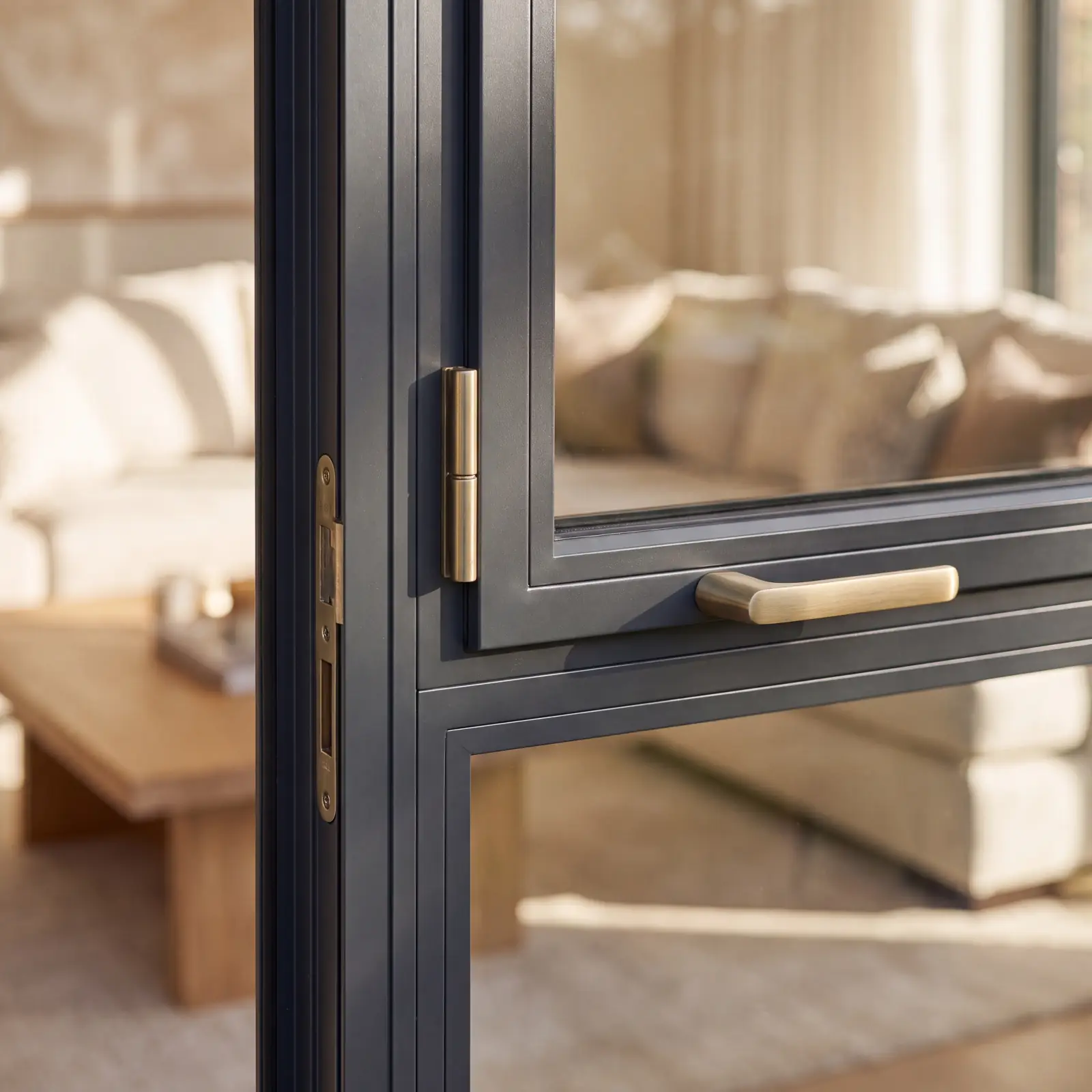
'Premium' might be the most abused word in home improvement. It gets applied equally to genuinely superior engineering and to perfectly ordinary windows with superior brochures. Premium windows do exist, though. The differences are concrete, some of them repay their cost several times over, and others are pure vanity. We manufacture across the whole range, so we can tell you which is which.
Premium you can measure
- Profile engineering. Thicker walls, more chambers and full reinforcement in uPVC; wider polyamide thermal breaks and higher-grade extrusions in aluminium. That's where stiffness comes from, and stiffness is why a premium window still locks sweetly in year twenty while a budget sash has long since dropped.
- Glass specification. Beyond the standard Low-E/argon/warm-edge recipe sit acoustic laminates, solar control and triple glazing where it earns its keep, chosen elevation by elevation rather than one spec for the whole house.
- Hardware grade. Named-brand multi-point locks, stainless friction hinges, damped handles that feel like a car door rather than a biscuit tin. Hardware is the highest-wear part of any window, and its grade sets the maintenance curve for decades.
- Manufacturing tolerance. Half-millimetre cutting, machine-dressed welds, precise glazing packers. Invisible at handover, decisive for how the window operates after twenty heating-and-cooling cycles a year for thirty years.
- Certification. A++ energy performance and PAS 24 security proven with certificates rather than adjectives.
Premium you can feel every day
All those measurable differences add up to daily sensations. The sash that closes with a soft, certain thunk and never needs lifting. Room-side glass that's merely cool in January. The road you stop hearing. A handle that turns the same in year fifteen as it did on day one. Cheap and premium windows photograph identically, but they don't live identically, and because a window gets operated thousands of times across its life, those small differences in feel compound into the whole ownership experience.
Premium that's mostly theatre
- Brand names that carry advertising budgets rather than better components. The spec sheet is the product, not the logo
- Exotic lifespan claims ('lasts forever') with no transferable written guarantee behind them
- Showroom extras like fancy corner joints and decorative gadgetry that never touch performance
- Triple glazing sold as a whole-house default in mild, sheltered settings where A++ double delivers the comfort
- 'Premium installation' offered as a paid tier. Correct installation is the baseline, not an upgrade
Where premium repays fastest
Spend up where conditions are hardest and use is heaviest. Weather-facing elevations. Big openings, since stiffness matters more as panes grow, which is the whole logic of slimline aluminium. The doors and windows you operate every day, and bedrooms where acoustic glass buys sleep. Then economise cheerfully on the utility room. A mixed specification, premium where it works and standard where nobody will ever notice, is what a good surveyor designs by default, and it beats all-budget and all-premium alike on value.
What premium really costs
Across our range, the genuinely premium specification, top-grade profile, per-elevation glass, named hardware and certified performance, typically runs 25-40% over builder-grade. Not the 100%-plus that national-brand pricing implies. That gap is the sales-model difference, not the window. Spread across a 30-year life, real premium costs pennies a day. The trick is making sure the pennies buy components, which is why every quote we issue lists them.
How to shop for premium without being played
Three habits protect you. First, get the components in writing, profile system, reinforcement, glass build and hardware brands, and compare quotes at that level. 'Premium range' as a line item is a tell. Second, handle the products. Work a corner sample and a display window hard, because engineering announces itself under your hands in a way brochures can't fake. Third, treat the guarantee as part of the specification. A genuine premium product carries a transferable, insurance-backed 10-year guarantee covering units, hardware and installation, because its maker doesn't expect to hear from you. A 'premium' window with a hedged guarantee is contradicting itself.
Buy this way and premium stops being a price tier. It becomes what it always should have been, the set of engineering choices that make a window a pleasure to live with for thirty years. Some of those choices cost more. All of them can be checked. None of them needs a television advert.
Frequently asked questions
What features make a window premium?
The measurable ones: engineered profiles with full reinforcement or wide thermal breaks, glass specified per elevation, named-brand hardware, tight manufacturing tolerances, and certified A++ and PAS 24 performance. Everything else is marketing until a spec sheet proves otherwise.
Are premium windows worth the money?
Where conditions are hard, weather-facing walls, large openings, daily-use doors, noisy bedrooms, yes, several times over across a 30-year life. As an undifferentiated whole-house default it's less clear-cut. A mixed specification usually beats all-premium on value.
How much more do premium windows cost?
From a fabricator selling direct, typically 25-40% over basic specification. Gaps much bigger than that are usually funding a brand's sales machine rather than better components. Compare written specifications and you'll see which is which.
Is aluminium always more premium than uPVC?
No. Material sets the style and the ceiling, but a reinforced, well-glazed, certified uPVC window outranks a budget aluminium one every time. Premium is a specification level within each material, not the material itself.
What hardware should a premium window have?
Named-brand multi-point locking with mushroom cams, stainless steel friction hinges (egress where required), damped ergonomic handles, and anti-snap cylinders on doors. All of it replaceable, all of it from identifiable manufacturers, which is itself a mark of quality.
Do premium windows need less maintenance?
Meaningfully so. Better gaskets, coatings and hardware stretch the maintenance curve, and tighter tolerances prevent the dropped-sash adjustments that budget windows collect over the years. The routine itself doesn't change, wash, lubricate, check seals. It just stays uneventful for longer.
Can I mix premium and standard windows in one house?
It's the smart default. Premium spec on weather-facing elevations, large openings, daily-use doors and noise-affected bedrooms, solid standard spec everywhere else. Nobody can tell from the street, the budget lands where you'll feel it, and a good surveyor will design the split for you.
Premium where you'll feel it, standard where you won't
Tell us about your house, elevation by elevation, and we'll build the specification that puts your budget where it earns its keep. Manufactured in Trafford Park, certified, and guaranteed for 10 years.
Call 07533 830717, WhatsApp us a photo for a fast quote, or request a free quote online.